
A thermostat can say 74 degrees while your home still feels sticky, smells musty, and never quite gets comfortable. That is often a humidity problem, not simply a temperature problem. Effective humidity control matters in Central Florida because warm outdoor air, frequent rain, coastal moisture, and long AC run seasons put constant pressure on your home’s cooling system.
When indoor moisture stays too high, your air conditioner has to work harder, surfaces can feel damp, and mold-friendly conditions can develop in hidden places. The goal is not to make the air desert-dry. It is to keep moisture at a level that supports comfort, protects the home, and gives your HVAC system a fair chance to do its job.
What Humidity Control Should Do in a Florida Home
Relative humidity measures how much moisture the air holds compared with the most it can hold at that temperature. For most homes, a practical target is generally between 45% and 55% relative humidity. Brief changes happen when people shower, cook, or come in from a storm, but readings that regularly stay above 60% deserve attention.
At the right level, indoor air feels cooler at the same thermostat setting. That can reduce the urge to keep lowering the temperature just to feel comfortable. Proper moisture management also helps limit condensation on vents and windows, protects furnishings and wood finishes, and reduces the damp conditions that can support mold growth.
There is a trade-off, though. Over-drying a home can cause dry skin, irritated sinuses, and shifting wood materials. In Tampa Bay and throughout Central Florida, excessive dryness is rarely the main issue. Most homeowners need a reliable way to remove moisture without turning their AC into an expensive, overworked dehumidifier.
Signs Your Home Has a Moisture Problem
High humidity is not always obvious from one room or one day. Pay attention to patterns. A bedroom that feels clammy at night, a persistent musty odor after the AC starts, or windows that fog on the inside can all point to excess indoor moisture.
Other common clues include towels that take too long to dry, mildew returning around bathrooms, warped cabinet doors, and a home that still feels warm even when the thermostat is set low. You may also notice weak airflow or uneven temperatures between rooms. Those symptoms can overlap with dirty coils, duct leakage, restricted returns, or an AC system that is not operating as intended.
A small digital hygrometer can give you a useful starting point. Place it away from supply vents, bathrooms, and exterior doors, then check it at different times over several days. If the number routinely stays above 60%, especially while the AC is running, it is time to look beyond the thermostat.
Why Air Conditioning Does Not Always Solve High Humidity
Your air conditioner cools air and removes moisture at the same time. Warm indoor air passes over the cold evaporator coil, where water vapor condenses and drains away. But that process only works well when the system has enough run time and the airflow, coil condition, and drainage are all in good shape.
An oversized AC can cool the home too quickly and shut off before it removes enough moisture. This is called short cycling. It can leave rooms cool but sticky, and repeated starts place added strain on equipment. A system that is too small can run for long stretches yet still struggle to hold temperature and humidity during peak summer weather.
Dirty evaporator coils are another frequent issue. Dust and buildup can restrict heat transfer and airflow, reducing the system’s ability to cool and dehumidify efficiently. A clogged condensate drain can create water problems around the equipment and may trigger shutdowns. Dirty return ducts, restricted filters, damaged ductwork, or air leaks in an attic can also interfere with balanced airflow.
This is why a portable dehumidifier is not always the complete answer. It can help a specific room, closet, or problem area, but it may mask a larger HVAC or ventilation issue. A whole-home approach starts with finding out where the moisture is coming from and whether the AC system is removing it effectively.
Humidity Control Starts With the Right Inspection
A good moisture assessment should not be guesswork. The technician should look at humidity readings, airflow, filter condition, visible coil and drain concerns, supply and return performance, and any signs of contamination or moisture in the duct system. If musty odors or visible growth are present, the source matters as much as the cleanup.
At The Ductors, the focus is on explaining what the system is showing in plain language. Homeowners should be able to see the condition of key components, understand what is affecting airflow, and know which recommendations are immediate priorities versus future maintenance items. Photo documentation is especially useful when the concern is inside ductwork, near coils, or in areas that are not normally visible.
For commercial spaces, the stakes can be even higher. Offices, retail locations, and other occupied buildings often have varying schedules, exterior-door traffic, and multiple zones. A moisture issue in one area can affect employee comfort, customer experience, and HVAC operating costs. Inspection and maintenance should account for how the building is actually used, not just the thermostat setting.
Practical Ways to Lower Indoor Humidity
The best solution depends on the cause. Start with the basics that support your HVAC system every day: use the correct filter type and replace it on schedule, keep supply and return vents open and unobstructed, and run bathroom exhaust fans during showers and for a short period afterward. Use the kitchen exhaust fan when boiling water or cooking with steam.
Also check for water intrusion. A leaking roof, plumbing drip, poorly sealed window, wet crawlspace, or condensation around air-handling equipment can add moisture faster than an AC system can remove it. Humidity control is not only about the air conditioner. It is about keeping unwanted water out of the home in the first place.
When humidity is consistently high, these upgrades or services may be appropriate:
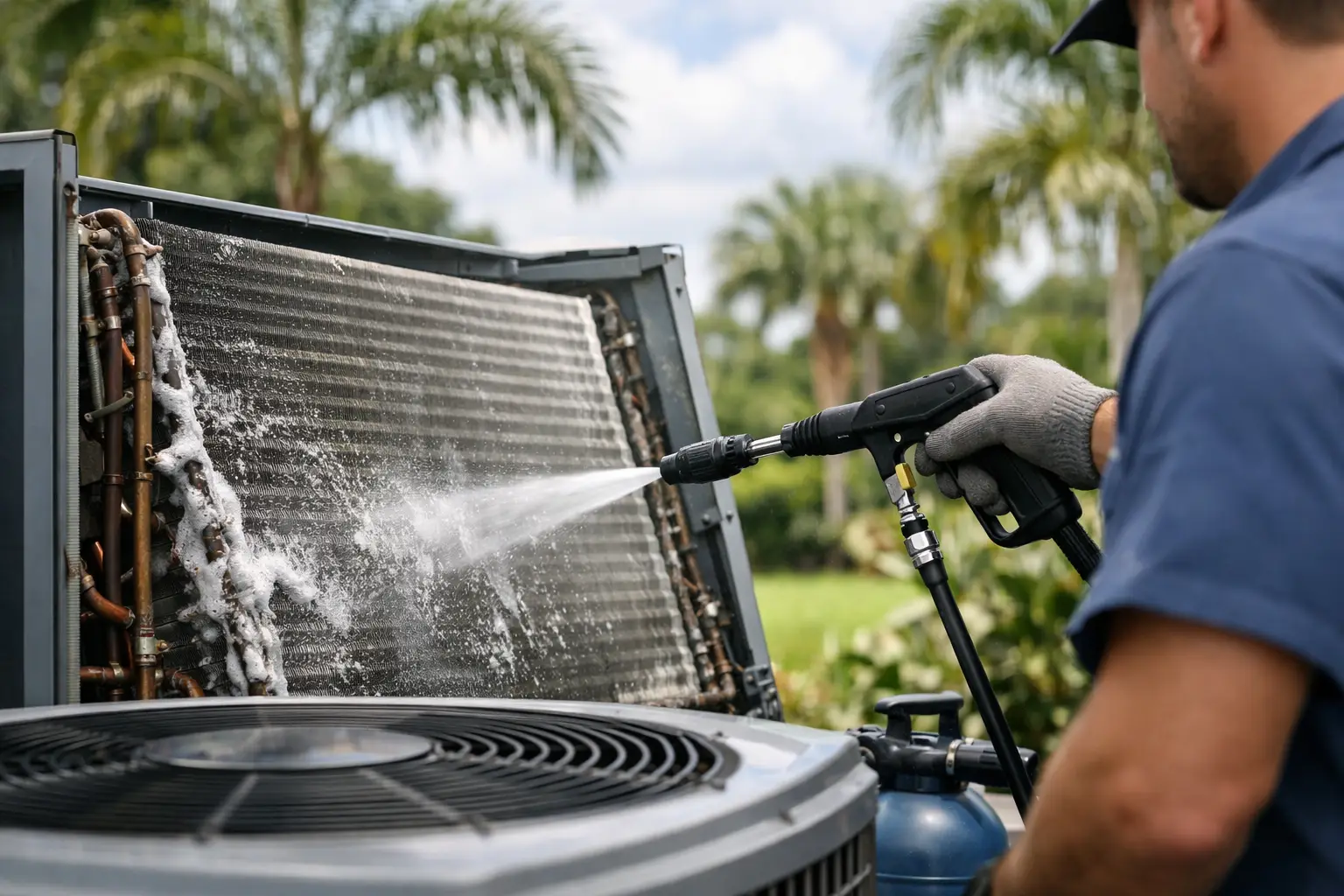
- Professional AC coil cleaning to remove buildup that reduces cooling and moisture removal.
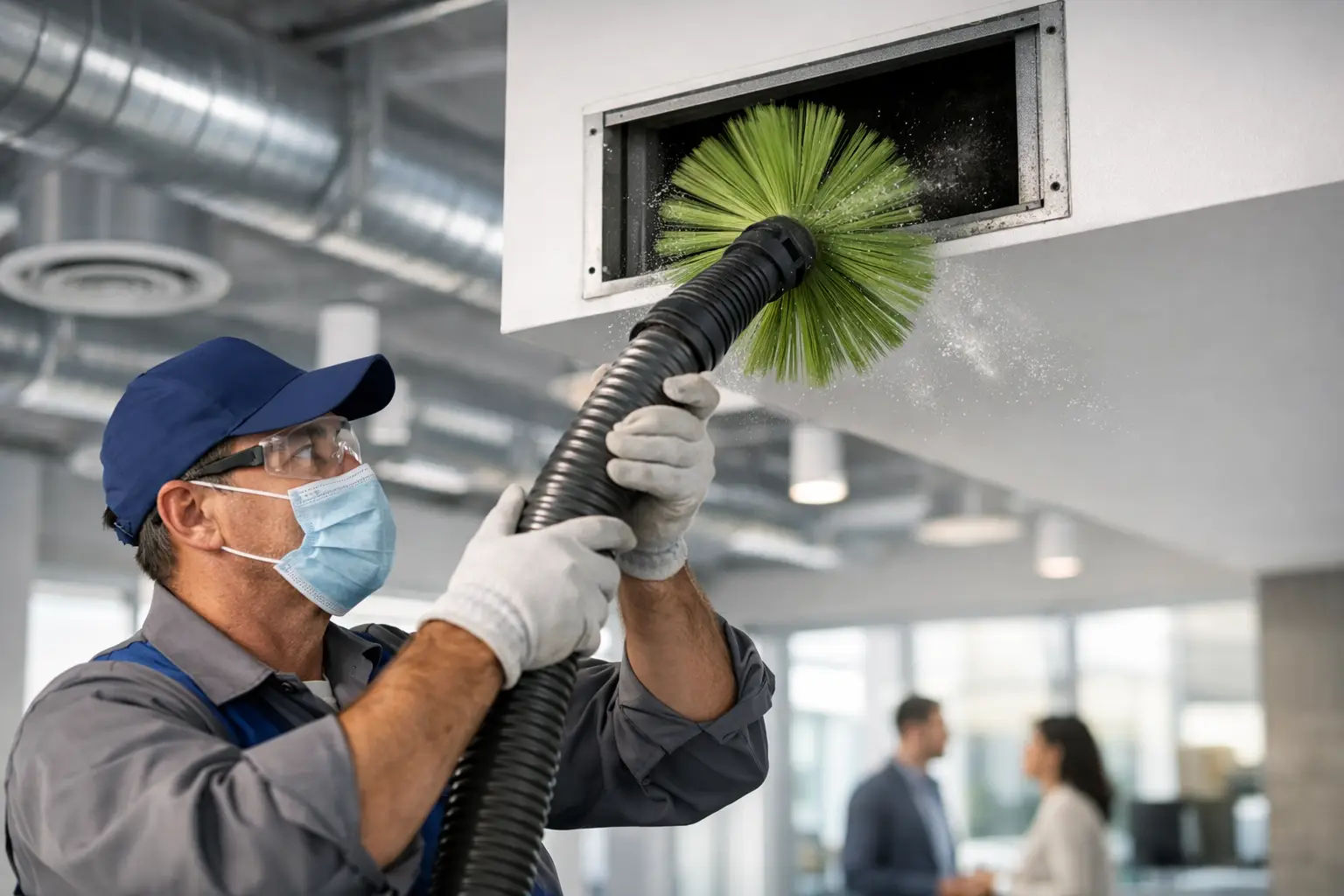
- Duct inspection and mechanical cleaning when dust, debris, odor, or contamination is affecting airflow and indoor air quality.
- Duct sealing or repair when hot, humid attic air is entering the system or conditioned air is escaping.
- A properly sized whole-home dehumidifier for homes with persistent moisture loads that the AC alone cannot manage.
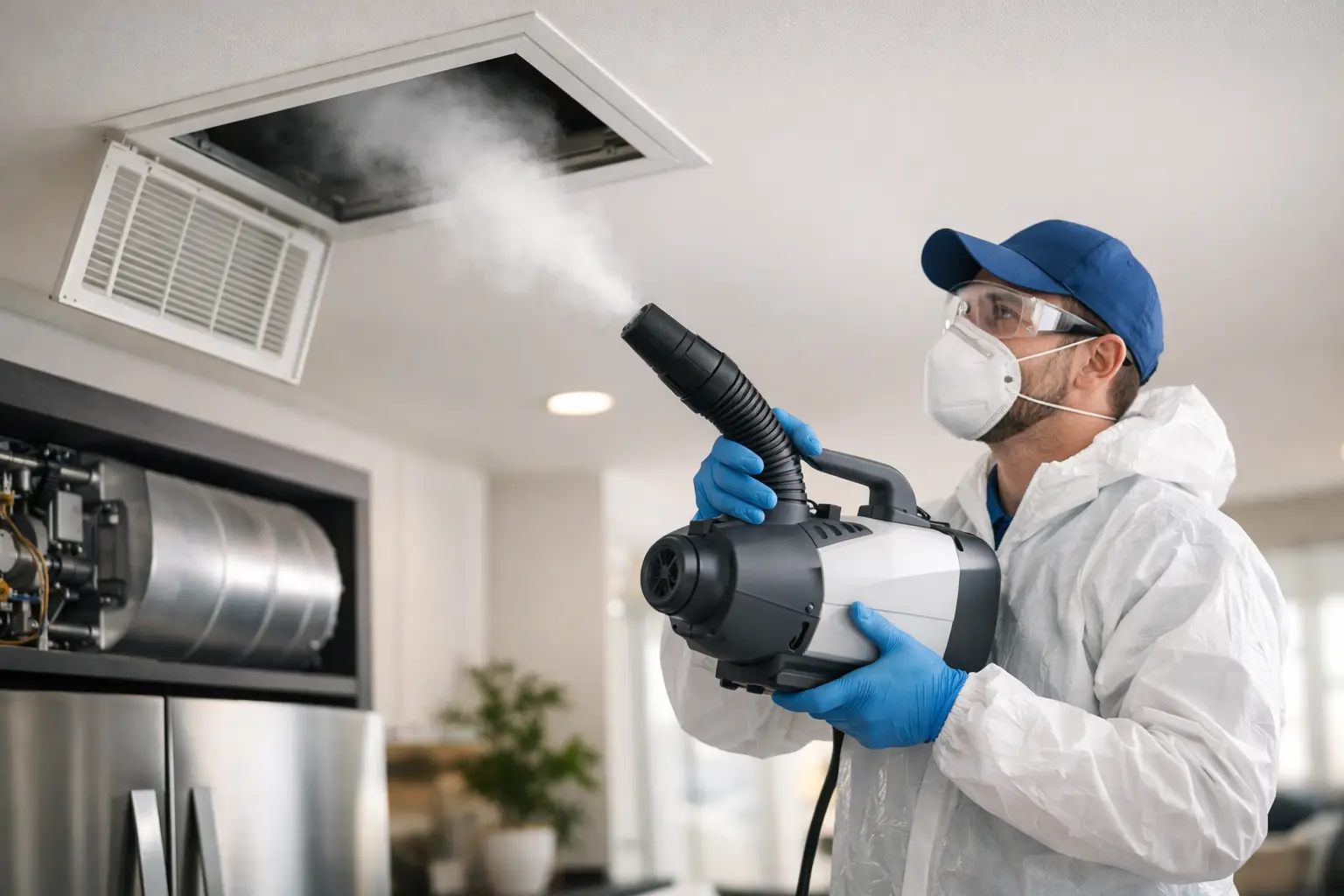
- UV-light installation as an optional added measure for certain HVAC systems, particularly where moisture and biological growth concerns exist around the coil area.
None of these should be sold as a one-size-fits-all fix. For example, UV lights do not repair a duct leak, and duct cleaning cannot correct an oversized AC. The right recommendation follows an inspection, clear findings, and a plan that addresses the actual source of the problem.
Do Not Ignore Musty Odors or Visible Mold
A musty smell when the air turns on is a signal worth taking seriously. It may come from moisture on or around the coil, a drain issue, contaminated duct materials, wet insulation, or mold elsewhere in the home. Sprays and air fresheners can cover the odor temporarily, but they do not remove the moisture or contamination causing it.
If mold is visible, the affected area should be evaluated carefully. Small, isolated surface growth may have a different solution than widespread moisture damage inside HVAC components or building materials. Professional remediation is about removing affected material or contamination safely, correcting the moisture source, and verifying that the area is clean and dry afterward.
Families managing allergies or respiratory sensitivities may notice damp, dusty air more quickly, but every household benefits from a clean, dry HVAC environment. The aim is not to make medical promises. It is to reduce avoidable moisture, dust, and contamination that can make a home less comfortable and harder to maintain.
A Simple Maintenance Rhythm for Florida Homes
Florida HVAC systems work hard for much of the year, so waiting for a breakdown is usually the costliest approach. Check humidity periodically, especially during the rainy season. Change filters as recommended for your household and system, keep drain lines maintained, and schedule professional HVAC service according to the equipment manufacturer’s guidance.
Duct and coil cleaning needs vary. A home with pets, renovation dust, heavy AC use, prior water issues, or recurring odors may need attention sooner than a home with clean filters and stable humidity. The point is to base maintenance on real conditions, not a generic calendar reminder.
A dry, comfortable home should not require running the thermostat lower and lower. When humidity stays in check, the air feels better, the HVAC system can operate more efficiently, and you get a clearer picture of what your home needs. If your house feels cool but damp, treat that feeling as useful information – it may be the first sign that your indoor air needs attention.