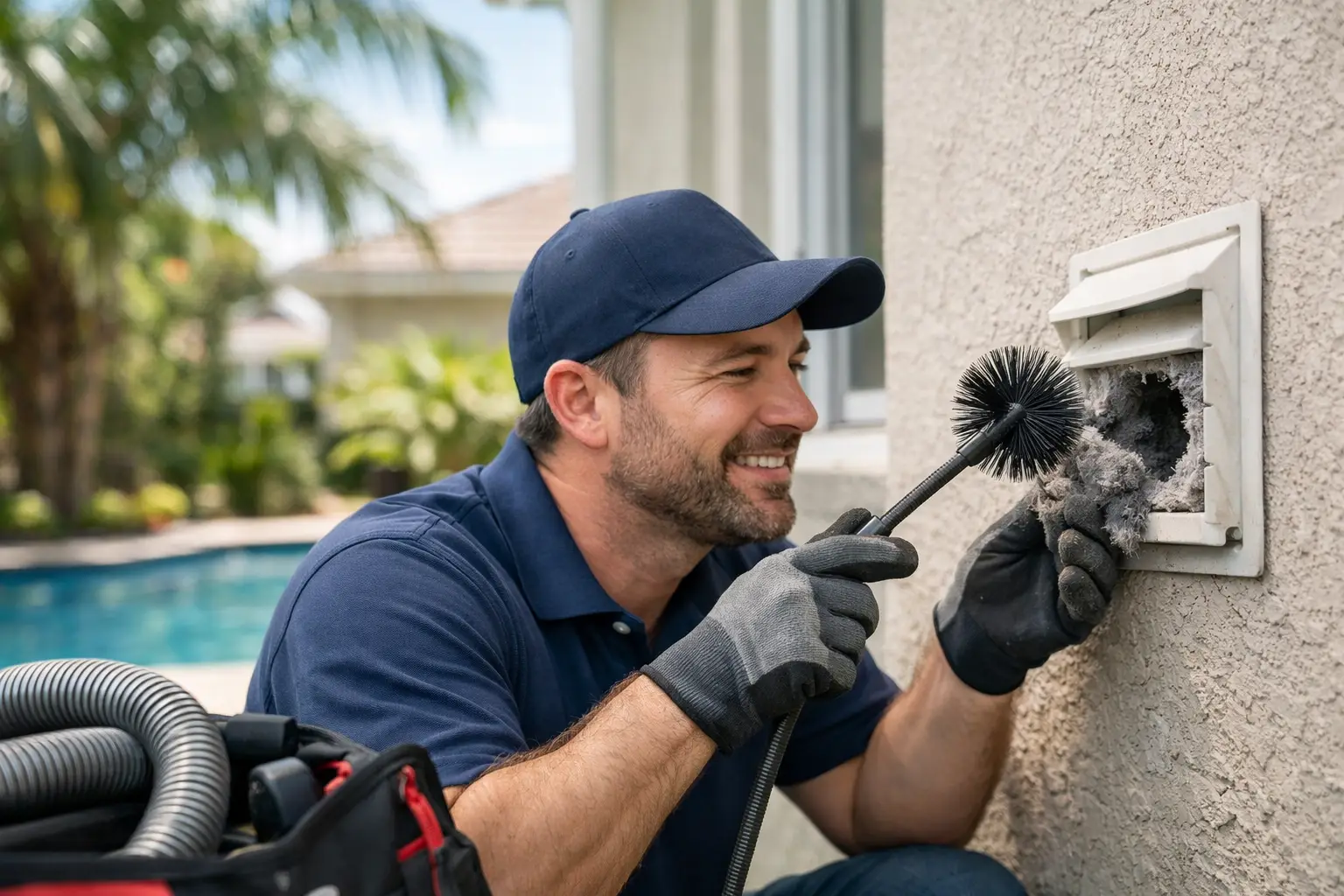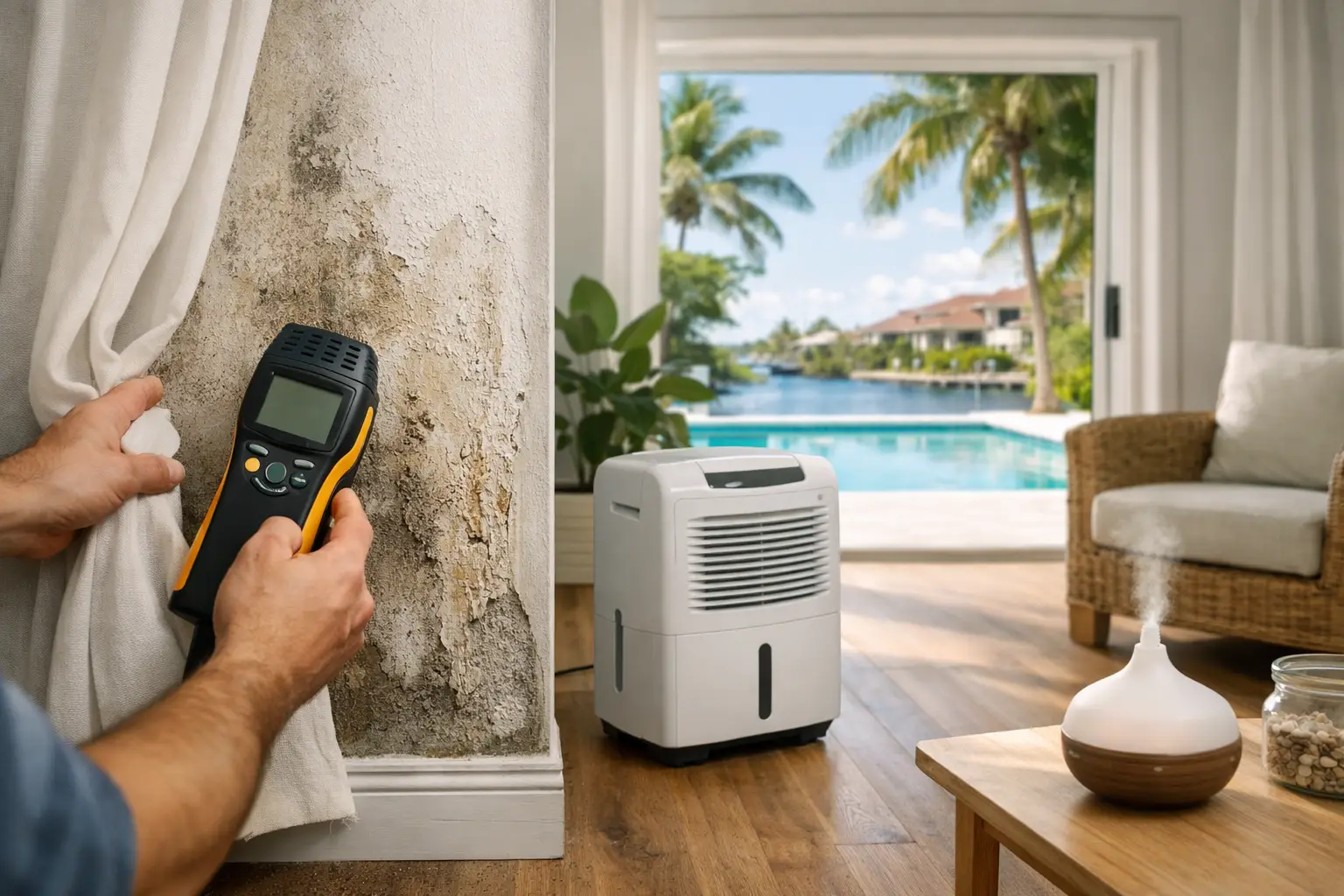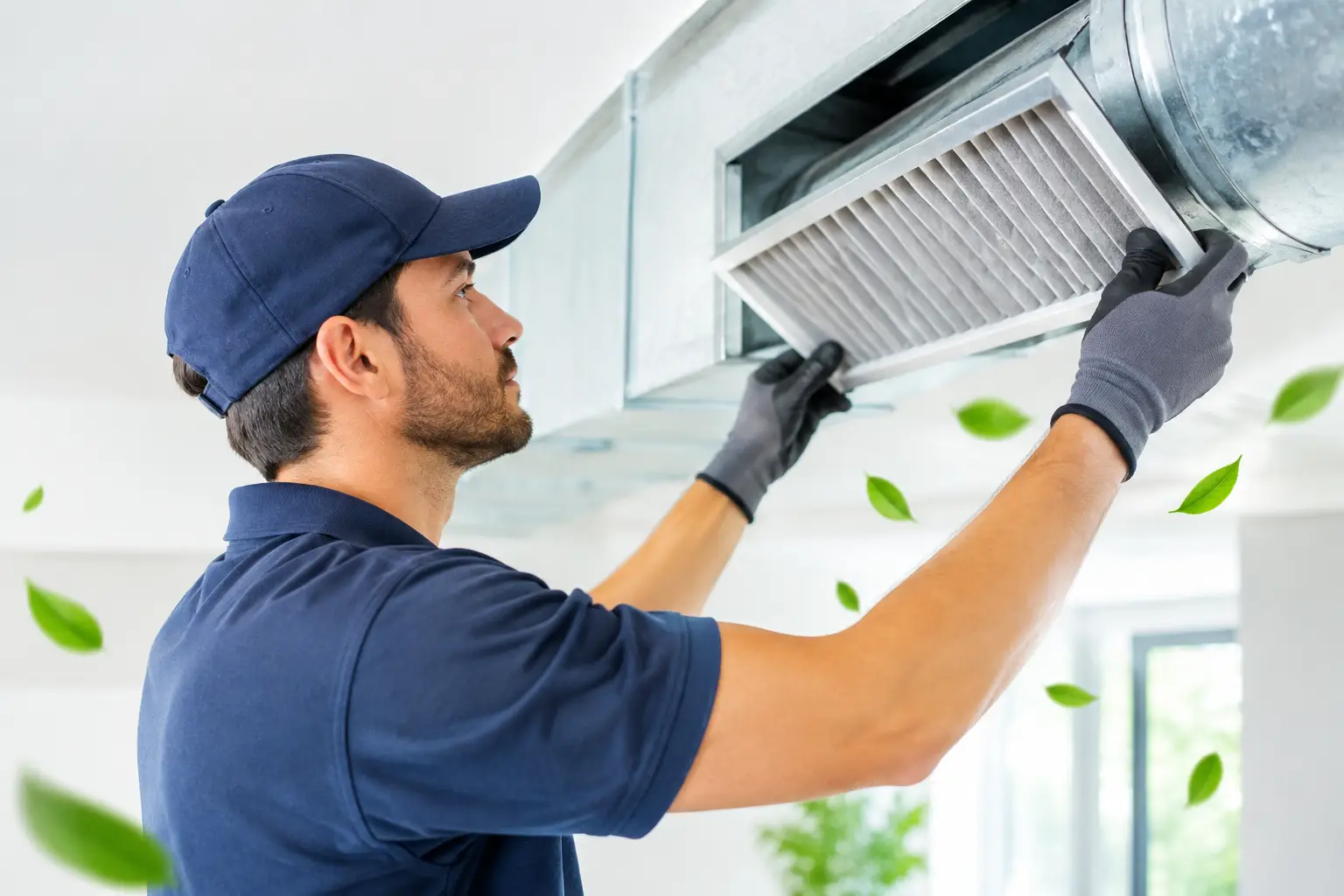
A Tampa Bay air conditioner can run for most of the year, pulling humid air across its indoor coil day after day. That constant work turns a small coating of dust, pet hair, and moisture into a layer of grime that restricts airflow and can contribute to musty odors. This AC coil cleaning guide explains what those coils do, how to spot trouble early, and why a professional cleaning is often the safer choice for Florida homes.
Why clean AC coils matter in Florida
Your HVAC system has two primary coils. The evaporator coil sits inside or near the indoor air handler and absorbs heat from the air in your home. The condenser coil is located in the outdoor unit and releases that heat outside. Both need clear airflow to do their jobs efficiently.
When an evaporator coil becomes dirty, the system may struggle to move enough air through it. Cooling can become uneven, humidity may linger indoors, and the equipment may run longer than it should. In Central Florida, where moisture is a nearly year-round concern, a dirty indoor coil can also create conditions that encourage microbial growth on organic debris.
A dirty condenser coil creates a different problem. Grass clippings, pollen, leaves, coastal debris, and outdoor dust can clog its delicate fins. Heat cannot escape efficiently, so the compressor works harder. That can mean higher electric bills, less reliable cooling, and additional wear on one of the most expensive parts of the system.
Clean coils do not solve every comfort problem. Leaky ducts, a failing blower motor, low refrigerant, an undersized system, and a clogged filter can produce similar symptoms. A proper inspection matters because it identifies the actual restriction instead of treating the most obvious one.
Signs your AC coils may need attention
A coil is hidden from view in many systems, so homeowners usually notice performance changes first. Watch for weak airflow at vents, rooms that take longer to cool, a system that runs for extended periods, or indoor air that feels cool but still damp.
Musty or dusty odors when the AC starts can also be a clue, especially if the odor returns after replacing the filter. Visible dust around supply vents, frequent filter loading, excess condensation near the air handler, or rising utility costs deserve attention as well.
Ice on refrigerant lines or the indoor unit is a more urgent warning sign. Restricted airflow from a dirty coil can contribute to freezing, but so can refrigerant issues and mechanical failures. Turn the system off and arrange for an HVAC professional to inspect it rather than trying to chip away ice or force the unit to keep operating.
What you can safely do between professional cleanings
Homeowners can protect coil performance without opening sealed equipment or applying harsh chemicals. Start with the air filter. Check it monthly during heavy cooling season and replace it according to its condition and the manufacturer’s recommendation. A filter that is visibly gray, loaded with pet hair, or bowed from airflow resistance has done all it can do.
Keep supply and return vents open and unobstructed by furniture, rugs, or drapes. Restricted returns can reduce airflow across the evaporator coil even when the filter is clean. If you have a condensate drain line that is routinely maintained as part of your HVAC care plan, keeping it clear helps prevent moisture backups near the indoor unit.
Outside, turn off power to the condenser before doing any basic cleanup around it. Remove leaves, branches, mulch, and loose debris from the surrounding area. Maintain clear space around the unit so it can breathe. Avoid leaning tools, furniture, or lawn equipment against it.
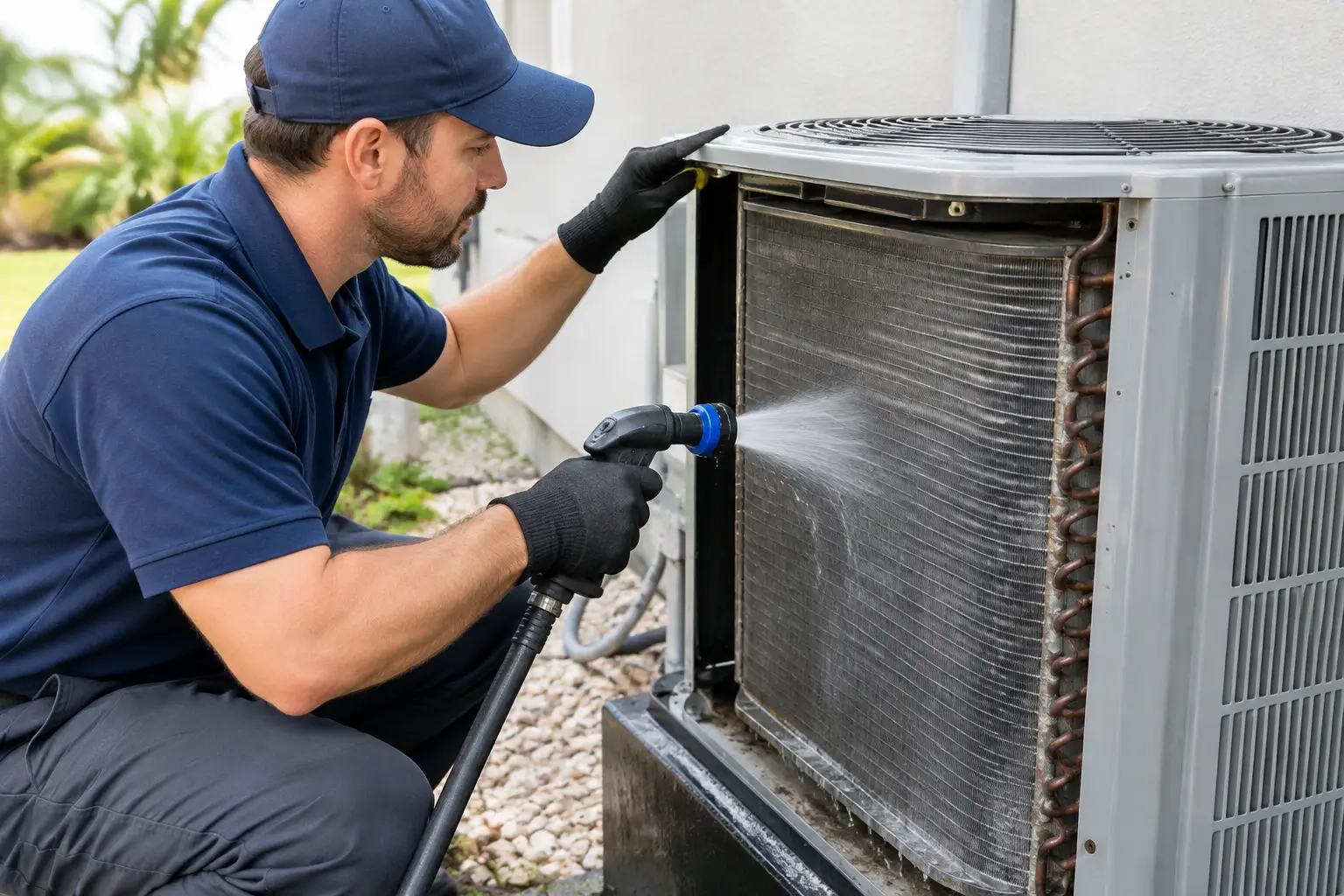
You may gently rinse surface debris from the outside of the condenser cabinet with a light garden-hose spray, directed from the inside outward only if you can do so safely without disassembling the unit. Do not use a pressure washer. High pressure can flatten the aluminum fins and make airflow worse. Never spray electrical components, and do not use acidic cleaners, bleach, or household degreasers on coils.
Why DIY evaporator coil cleaning has limits
The indoor coil is not a simple household-cleaning project. It is often behind an access panel near electrical wiring, refrigerant lines, insulation, and a condensate system. Its fins bend easily, and buildup may be on the side of the coil you cannot see without proper access.
A spray-and-go cleaner may loosen surface dirt, but it cannot always remove compacted debris deep in the coil. Used incorrectly, chemical cleaners can damage the coil, create drainage problems, affect indoor air quality, or leave residue behind. Opening equipment without knowing how to reseal panels can also cause air leaks that reduce performance.
Professional service is particularly worthwhile if the system has persistent odors, evidence of mold or mildew, heavy pet hair, a history of drain clogs, water staining around the air handler, or noticeably reduced cooling. The goal is not simply to make the coil look cleaner. It is to restore safe airflow and confirm that the surrounding HVAC components are working as they should.
What professional AC coil cleaning should include
A thorough coil-cleaning appointment should begin with an inspection, not a one-size-fits-all spray treatment. A trained technician should assess the coil’s condition, the filter, blower area, drain pan, condensate line, accessible duct connections, and outdoor condenser. This helps determine whether contamination is isolated to the coil or part of a broader airflow or indoor air quality issue.
The technician should protect the work area, safely access the equipment, and use methods appropriate for the coil and level of buildup. Depending on the system, that may include controlled mechanical removal, approved coil-cleaning products, careful rinsing, and fin straightening where appropriate. The drain pan and line should also be checked because debris washed from a coil has to exit the system properly.
After cleaning, the best service providers verify the result. Ask for a clear explanation of what was found, what was cleaned, and whether the technician noticed damage, biological growth, drainage concerns, or airflow restrictions that need separate repair. Before-and-after photos are especially useful when the evaporator coil is difficult for a homeowner to see.
The Ductors takes this inspection-first approach so homeowners can understand the condition of their equipment rather than guess at the source of odors, dust, or poor cooling.
How often should coils be cleaned?
There is no single calendar rule for every home. In many Florida households, an annual HVAC inspection is a practical baseline because AC systems operate so frequently. Coil cleaning may be needed less often when filters are changed consistently, the home has low dust, and there are no pets, smoking, renovation projects, or nearby construction.
Some homes need closer attention. Families with shedding pets, allergies, multiple occupants, open windows during pollen season, or a dusty renovation environment may see buildup faster. Homes near the coast can also deal with additional outdoor debris and moisture exposure. Commercial spaces may require a more structured maintenance schedule because occupancy and operating hours place heavier demands on equipment.
Rather than paying for cleaning automatically, use inspection findings and system performance to guide the decision. A coil that is clean does not benefit from unnecessary chemical treatment. A coil coated in debris should not be ignored just because it was cleaned recently.
Protect your comfort before a small problem grows
A clean filter and a clear outdoor unit are useful habits, but they cannot replace a careful look inside a hard-working HVAC system. If your home feels humid, airflow has weakened, or the AC has developed a musty smell, schedule an inspection before the equipment is pushed into another long Florida cooling season. Clear answers, visible evidence, and properly cleaned coils can help your family breathe more comfortably while giving your system a better chance to cool efficiently.