That musty smell that hits when your AC turns on is not something your family should have to live with. Learning how to remove vent odors starts with identifying what is feeding the smell – because air fresheners may cover it for an hour, but they will not correct the moisture, debris, or mechanical issue inside the system.
In Tampa Bay and Central Florida, vent odors often show up after heavy rain, during long cooling cycles, or when the air conditioner has been running nearly nonstop. High humidity gives mold and mildew the conditions they need to grow, while dust, pet dander, and household debris can collect inside ducts and around HVAC components. The good news is that most odor problems can be traced to a specific source and professionally corrected.
Start by Identifying the Type of Vent Odor
The smell itself provides useful clues. A damp, earthy, or locker-room odor usually points to moisture, microbial growth, or dirty HVAC components. A stale, dusty odor can indicate buildup in the ductwork, a clogged filter, or debris around supply registers. A burning smell may be caused by dust on heating elements after a long period of inactivity, but persistent burning odors require prompt HVAC attention.
Some smells are more urgent. If you notice a gas-like odor, strong chemical smell, smoke, melting plastic, or an odor that causes headaches, nausea, or eye irritation, turn off the system if it is safe to do so and contact the appropriate emergency or HVAC professional. Do not try to solve these issues with cleaners, fragrance products, or a quick filter change.
A sewage-like odor may come from a dry drain trap, plumbing issue, or a disconnected drain line near the air handler rather than the ducts themselves. A dead-animal odor can come from a pest issue in an attic, wall cavity, return duct, or crawlspace. The right solution depends on the source, which is why guessing can waste time and money.
How to Remove Vent Odors at the Source
Replace the filter and check airflow
A dirty HVAC filter is one of the first things to address. When a filter becomes loaded with dust and debris, it can restrict airflow and allow contaminants to circulate through the home. Check the filter’s size and recommended replacement schedule, then install the correct type for your system.
In a Florida home with pets, allergies, ongoing construction nearby, or heavy AC use, filters may need attention more often than the standard schedule printed on the package. If the filter is unusually dirty after only a short time, that can be a sign of excessive dust in the home, return-air leaks, or ductwork that needs a closer look.
Also pay attention to airflow at each register. Weak airflow in one room, hot and cold spots, or visible dust blowing from vents may point to obstructions, duct leaks, or buildup deeper in the system.
Clean visible registers, but avoid pushing debris inside
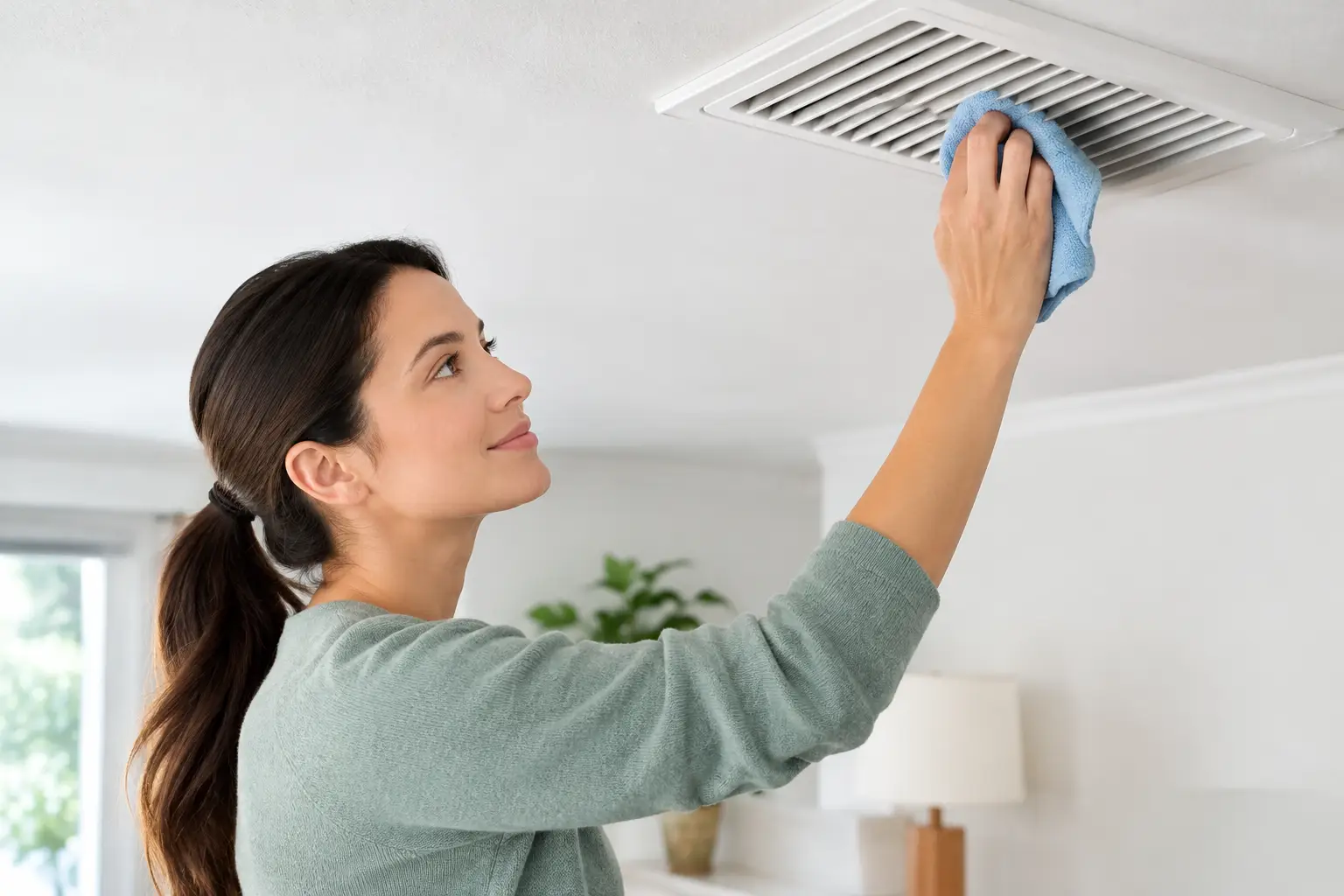
Remove supply and return vent covers and clean them with a damp cloth and mild household cleaner. Vacuum the immediate area just inside the opening using a brush attachment. This can improve the appearance of the vents and remove loose surface dust.
Do not insert household brushes, wet rags, or chemical sprays deep into the duct. These methods can push debris farther into the system, leave behind moisture, or damage flexible ductwork. Spraying fragrance or disinfectant into a vent is particularly risky when the odor source has not been identified. You may add chemicals to the air your family breathes without eliminating the underlying problem.
Address moisture around the air handler and evaporator coil
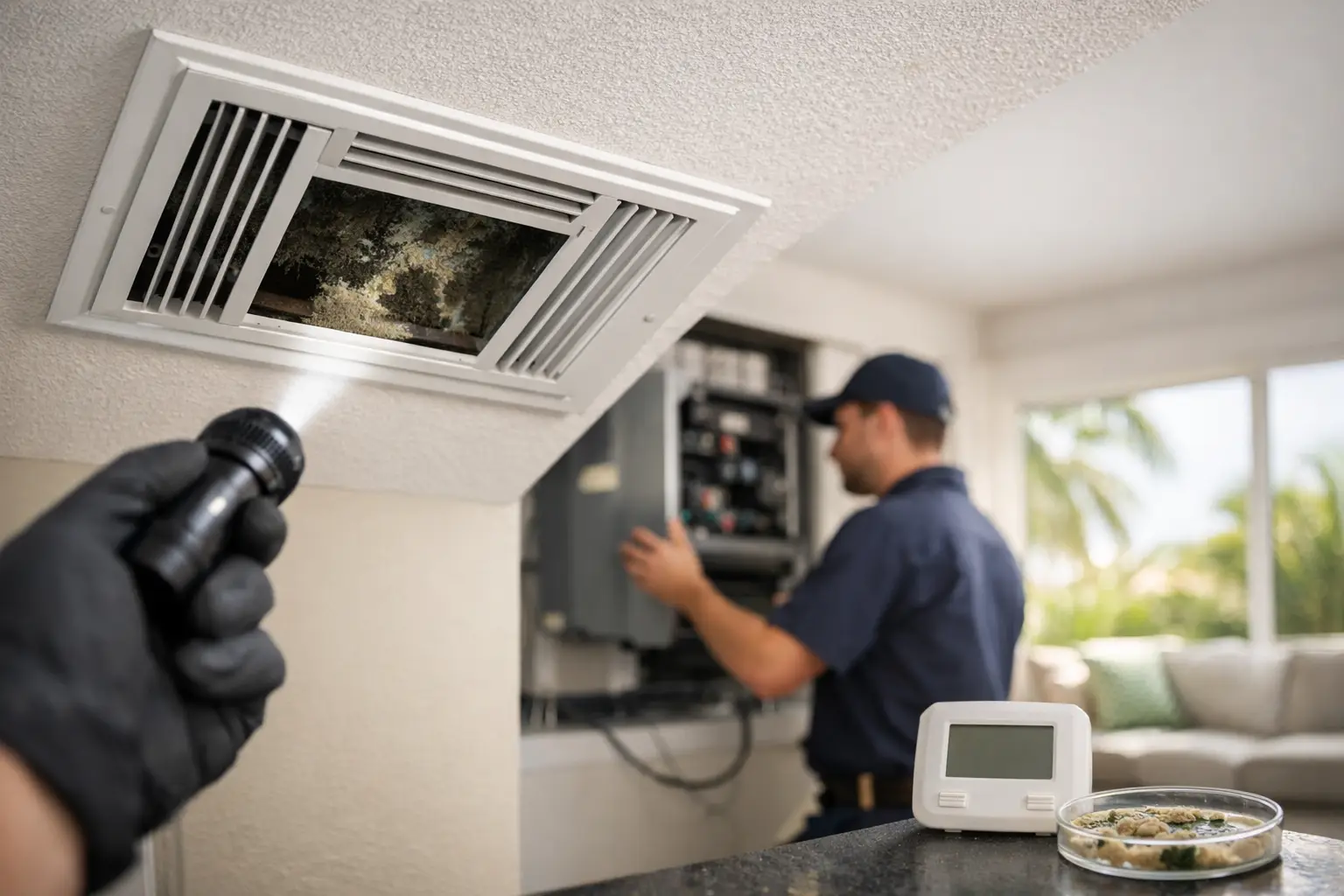
Musty AC odors frequently begin near the indoor air handler, evaporator coil, condensate pan, or drain line. As warm indoor air moves across the cold coil, condensation forms. That is normal. The problem begins when the condensate does not drain properly, moisture remains on dirty surfaces, or biological growth develops around the coil and pan.
Look for signs such as water around the air handler, a clogged condensate drain, recurring drain backups, rust, slime in the drain line, or odor that becomes strongest right after the system starts. These conditions deserve professional service. A trained technician can inspect the coil, pan, drain system, blower area, and nearby duct connections, then explain what is causing the odor before recommending the proper cleaning or repair.
Coil cleaning is not just about smell. A dirty coil can reduce airflow and make the AC work harder to cool your home. Removing buildup may improve comfort while helping protect equipment efficiency.
Have contaminated ductwork inspected and cleaned
Duct cleaning makes sense when there is verified buildup, visible contamination, pest debris, post-renovation dust, or a persistent odor that remains after the HVAC components have been evaluated. It is not a substitute for fixing an active water leak, drainage failure, or humidity issue. If moisture is still present, odors can return.
A proper duct-cleaning process should involve more than vacuuming near the registers. The system should be inspected, mechanically cleaned with professional equipment, and evaluated for conditions that could continue affecting indoor air quality. Before-and-after documentation helps homeowners see what was found and what work was completed.
If mold is suspected, the goal is not simply to mask the smell. The moisture source must be corrected, affected materials must be evaluated, and the system should be cleaned or remediated according to the actual conditions. In Florida, this step matters because high humidity can turn a small moisture problem into a recurring comfort and air-quality issue.
Consider HVAC sanitization when conditions support it
After contaminants have been physically removed, HVAC sanitization may be appropriate for certain odor and microbial concerns. Sanitization works best as part of a complete process: inspection first, mechanical cleaning where needed, correction of moisture conditions, and then targeted treatment.
For homes with recurring humidity-related odors, optional UV-light equipment may also be worth discussing with a qualified HVAC professional. UV systems are not a replacement for cleaning a dirty coil or fixing drainage problems, but they can help support cleaner conditions around key HVAC components when correctly selected and installed.
Do Not Forget Dryer Vent Odors
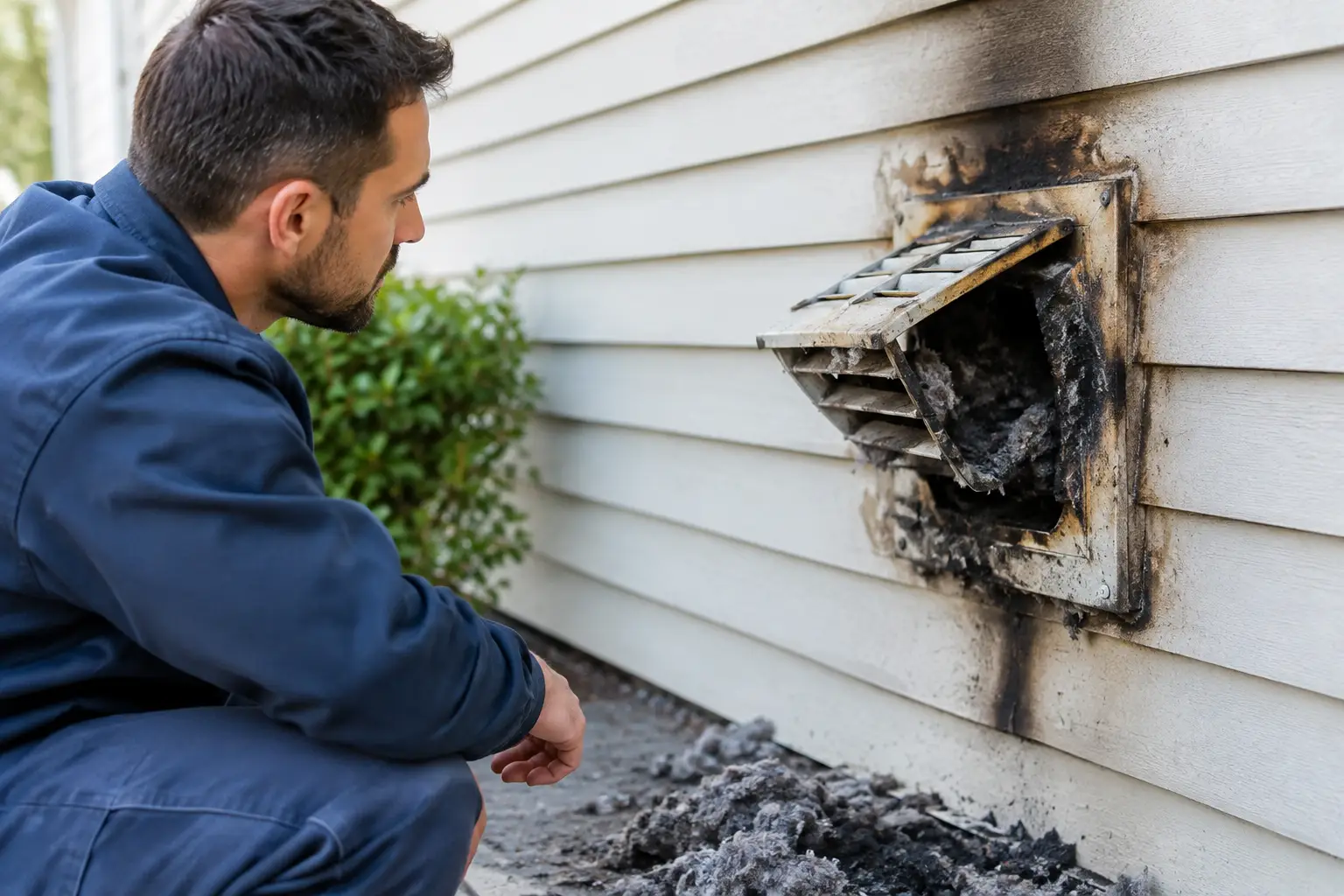
Not every vent odor comes from the AC system. A laundry room that smells hot, musty, smoky, or unusually dusty may have a dryer vent issue. Lint accumulation restricts airflow, causes clothes to take longer to dry, and can create a serious fire risk.
Check the exterior dryer vent while the dryer is running. You should feel a steady flow of warm air. Weak airflow, a flap that does not open, excess lint outside the vent, or a burning smell calls for professional dryer vent cleaning and inspection. Never ignore a hot dryer or a burning odor simply because the appliance still runs.
Prevent Odors From Returning
Once the source has been removed, prevention is much easier than repeatedly covering up a smell. Keep indoor humidity under control, especially during Florida’s wet months. Run bathroom exhaust fans during and after showers, repair leaks quickly, keep condensate drains maintained, and avoid blocking return vents with furniture or storage.
Regular HVAC maintenance also gives technicians an opportunity to spot dirty coils, drainage concerns, loose duct connections, and early signs of contamination before the problem affects the entire home. If odors are recurring, ask for a clear explanation of what was found, what caused it, and what steps will keep it from coming back.
The Ductors helps homeowners throughout Tampa Bay and Central Florida identify odor sources through detailed inspection, professional cleaning, and straightforward recommendations. Whether the issue is dusty ductwork, a contaminated coil, a clogged dryer vent, or persistent moisture around the system, visible evidence and a clear plan make the next step easier.
A clean-smelling home should not depend on candles or spray fragrances. When air coming from your vents smells fresh because the system is clean, dry, and moving air properly, your family can simply breathe easier.