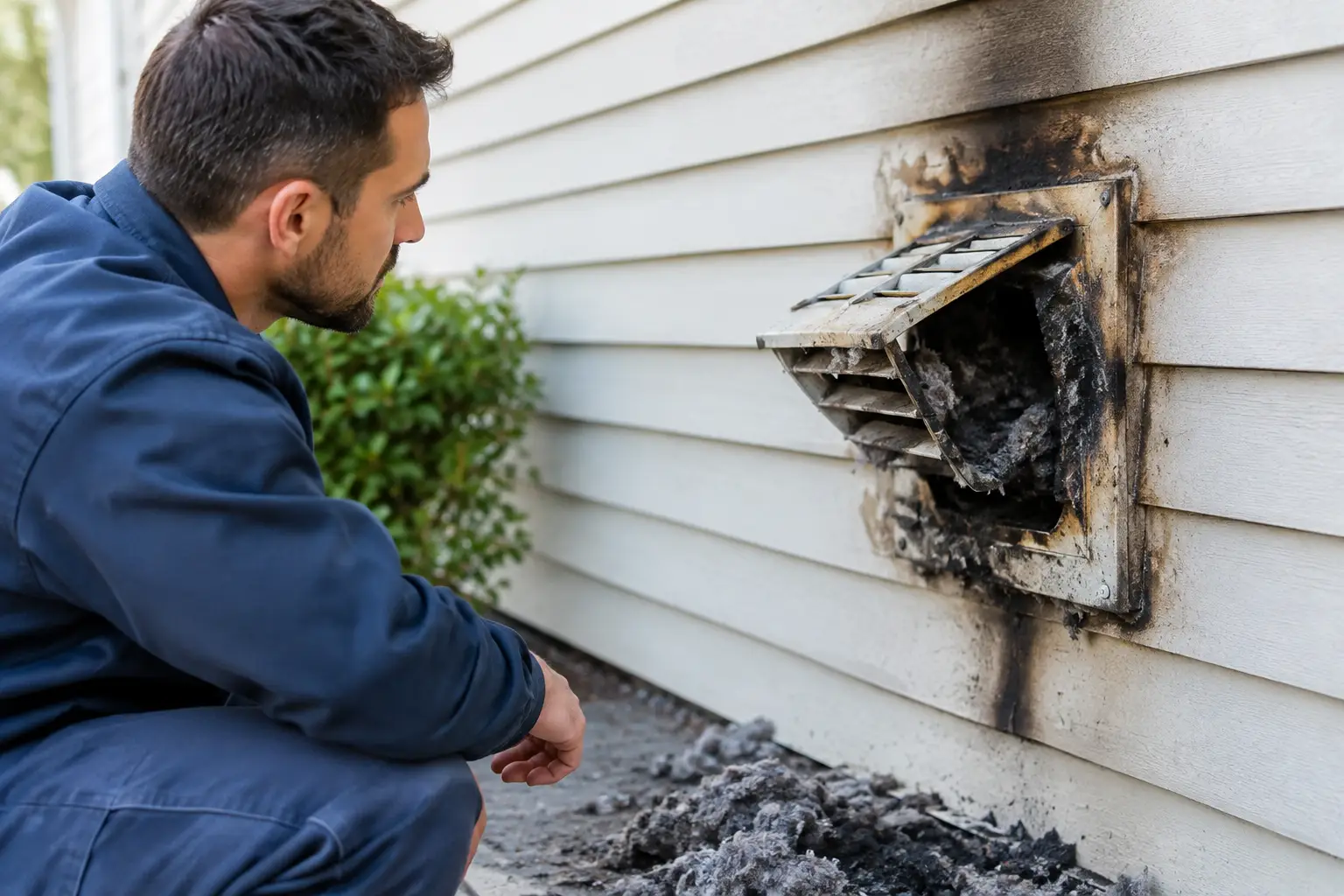
A load of towels should not make a laundry room smell hot, feel unusually humid, or leave the dryer running for two full cycles. Yet those were the warning signs in this dryer vent fire case study – signs that had been building for months before a small fire brought the problem into view.
The homeowners had noticed that laundry took longer to dry. They also saw more lint around the dryer and assumed the appliance was simply getting older. What they could not see was a packed vent line behind the wall, a crushed transition hose, and a vent termination that was barely releasing air outdoors. The dryer was working harder with every load, while heat and combustible lint accumulated where no one could see it.
This is why dryer vent cleaning is not just a housekeeping task. It is a practical safety service that protects your family, helps your dryer operate efficiently, and can prevent a manageable airflow issue from becoming an emergency.
The Dryer Vent Fire Case Study
This case reflects a common pattern found during dryer vent inspections in Florida homes. The family had a large-capacity dryer in an interior laundry room. The vent traveled through the wall, across part of the attic, and exited near the roofline. That longer run made proper airflow especially important.
For roughly a year, drying times had gradually increased. The family cleaned the lint screen after each load, as most homeowners do, but the lint screen only catches part of the material released during drying. Fine lint had continued into the vent pipe, where it clung to bends, seams, and damp residue inside the line.
Florida humidity added another layer to the problem. When a vent is restricted, moist dryer exhaust does not leave the home quickly. Moisture can help lint compact into a dense mat, particularly in long vent runs or systems with multiple turns. That restriction forces the dryer to retain more heat during a cycle.
One afternoon, the homeowner smelled something burning near the laundry room. When she opened the dryer door, the clothing was extremely hot. A small amount of smoke appeared at the back of the appliance, and she called for help. The fire was contained before it could spread beyond the dryer area, but the incident required cleanup, appliance service, and an inspection of the venting system.
The important point is not that every slow dryer will catch fire. It will not. But slow drying, excess heat, and poor exhaust airflow are warning signs that deserve attention before the risk increases.
What the Inspection Found
After the immediate safety issue was addressed, a vent inspection revealed several contributing conditions. No single issue caused the problem. Together, they created the kind of restricted airflow that lets heat and lint build up.
A vent line filled with compacted lint
The vent contained thick lint deposits along much of its length. The buildup was heaviest at turns in the duct and near the exterior termination. Lint is highly combustible, so allowing it to collect in a hot exhaust pathway is never a good gamble.
A crushed flexible connector behind the dryer
The flexible connector between the appliance and the wall had been compressed when the dryer was pushed back into place. This is common in tight laundry rooms. Even a partial crush can limit exhaust flow and make the dryer work harder than it should.
An exterior vent hood blocked by lint and debris
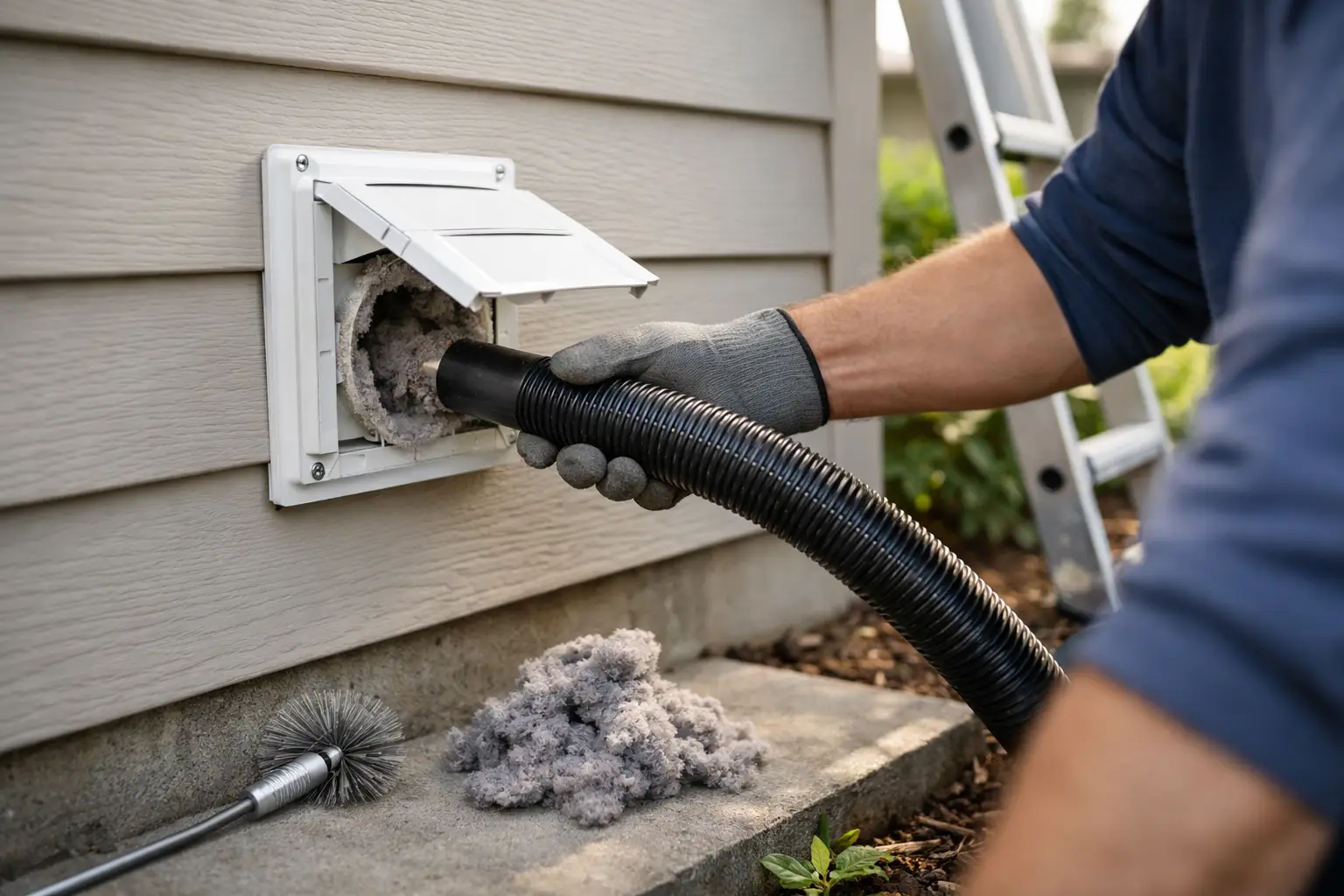
Outside, the vent hood flap was not opening fully. Lint had collected around the outlet, and outdoor debris had added to the obstruction. From inside the home, everything looked normal. At the termination point, the system was struggling to exhaust heat and moisture.
Overheating symptoms that were easy to dismiss
Long dry times were the clearest clue. The family had also noticed that the laundry room felt warmer and that clothes sometimes came out with a faint overheated smell. These symptoms can also point to an appliance problem, which is why a professional inspection matters. The dryer itself and the vent system should be evaluated together rather than guessing at the cause.
How the Fire Risk Builds
A dryer creates heat by design. Under normal conditions, that heat and the moisture from wet clothing move through the vent and outside. When the path is clear, the appliance can dry effectively without excessive strain.
When the path is restricted, the dryer cannot release heat as intended. The appliance may run longer, internal temperatures may rise, and lint can gather in places that are difficult to inspect without proper equipment. If enough heat reaches accumulated lint, ignition becomes possible.
The risk depends on the condition of the dryer, the vent layout, the type of materials used, how often the dryer runs, and whether the system is properly installed. A short, straight metal vent with a clean exterior outlet is very different from a long, winding run with damaged flexible ducting. This is why a quick look at the lint trap is helpful, but it is not a complete dryer vent safety check.
The Corrective Work That Made the Difference
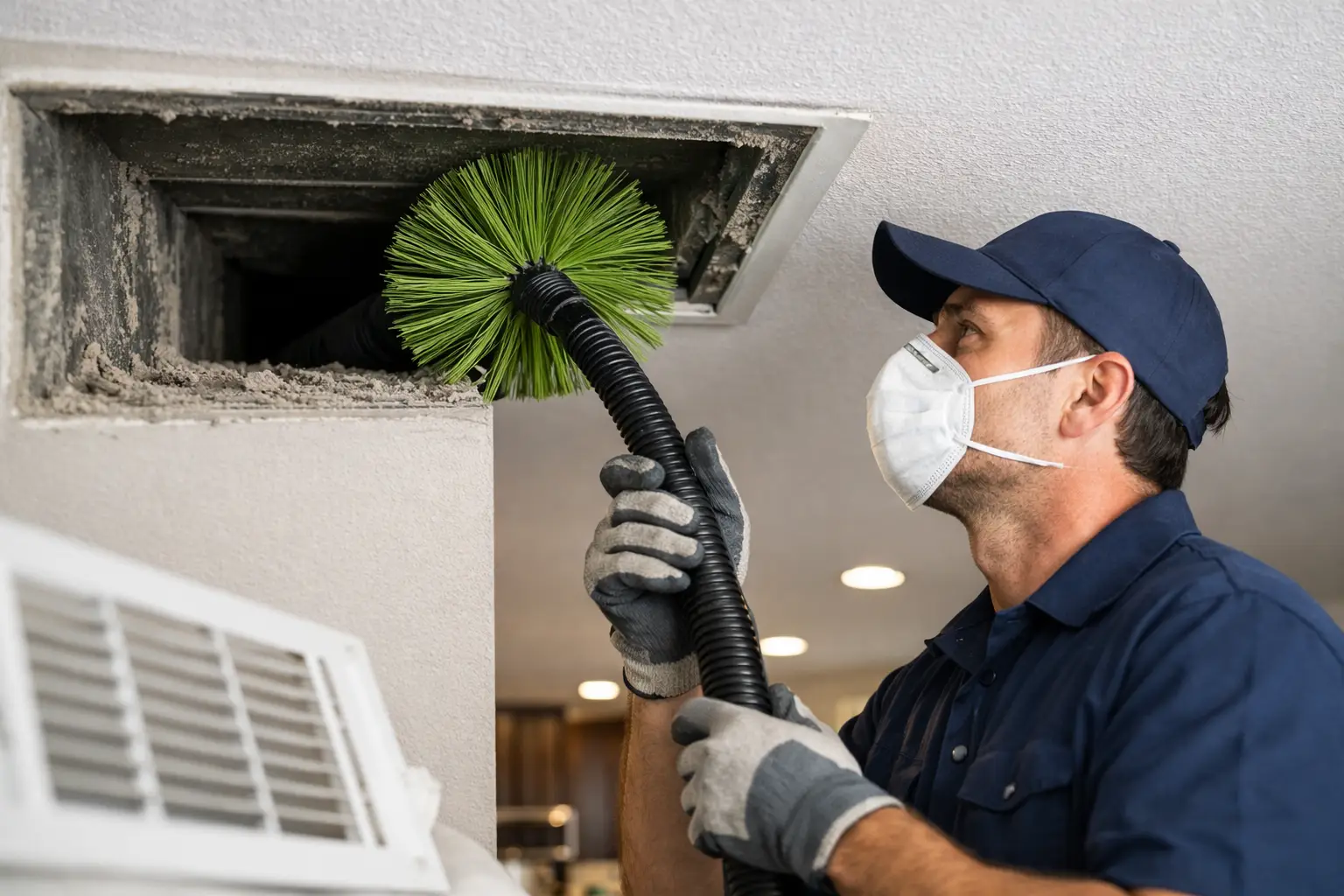
The repair plan started with the vent path, not a cosmetic cleanup. The line was mechanically cleaned from accessible points to remove compacted lint and debris. The technician also cleared the exterior termination and confirmed it could open and close properly.
Next, the crushed connector behind the dryer was replaced with a properly sized metal connection and positioned to reduce kinking when the appliance was moved back. The dryer was then tested for airflow and operation after cleaning. Post-service verification matters because a clean-looking vent is not enough. Homeowners need confidence that air is actually moving through the full system and exiting where it should.
In cases where a vent is damaged, excessively long, improperly routed, or made from unsuitable material, cleaning alone may not solve the underlying issue. A trustworthy technician should explain what can be cleaned, what should be repaired, and why. Clear photos and straightforward findings help homeowners make decisions without pressure.
Warning Signs to Act On Before Laundry Day Gets Risky
Most dryer vent problems do not announce themselves with flames. They start with inconvenience and small performance changes. Pay attention if your dryer takes more than one normal cycle to dry a typical load, the machine or clothing feels unusually hot, the laundry room becomes humid, or you notice a burning smell.
Other concerns include visible lint around the dryer connection, little or no airflow at the exterior vent hood, a flap that does not open while the dryer runs, or a dryer that shuts off unexpectedly. These signs do not automatically mean there is a fire hazard, but they are good reasons to stop guessing and schedule an inspection.
If you smell smoke or see signs of fire, turn off the dryer if it is safe to do so, leave the area, and contact emergency services. Do not restart the appliance until the dryer and venting system have been checked.
A Practical Maintenance Plan for Florida Homes
Cleaning the lint screen before or after every load remains essential. Wash the screen periodically with warm water and mild soap, too. Dryer sheets and fabric softener residue can create a film that reduces airflow through the screen, even when it appears clean.
Beyond that routine step, the full dryer vent system needs professional attention on a schedule based on use and layout. Many households benefit from annual cleaning, especially families who run frequent loads, homes with pets, or dryers connected to long vent routes. A larger household may need service sooner. A lightly used dryer with a short, straight vent may need a different schedule.
Do not overlook the exterior outlet. It should be clear of lint, landscaping, nests, and debris. Avoid vent covers that trap lint or screens that prevent the flap from operating freely. The goal is simple: hot, moist air needs a clear route outdoors.
What Homeowners Should Expect From a Professional Visit
A quality dryer vent service should be more than a technician pushing a brush into a pipe. The visit should include an inspection of the accessible vent route, the connector behind the dryer, and the exterior termination. The technician should explain any restrictions, damage, or installation concerns in plain language.
At The Ductors, that approach means using professional equipment to remove built-up lint, checking airflow after service, and documenting conditions when appropriate. The purpose is not to create fear. It is to give homeowners clear evidence of what was found and confidence that their dryer can move air more effectively.
Your dryer should make laundry easier, not leave you wondering why every load takes twice as long. If drying times are creeping up or the laundry room feels hotter than it should, treat that change as your cue to have the vent checked before the next load becomes the one that exposes the problem.