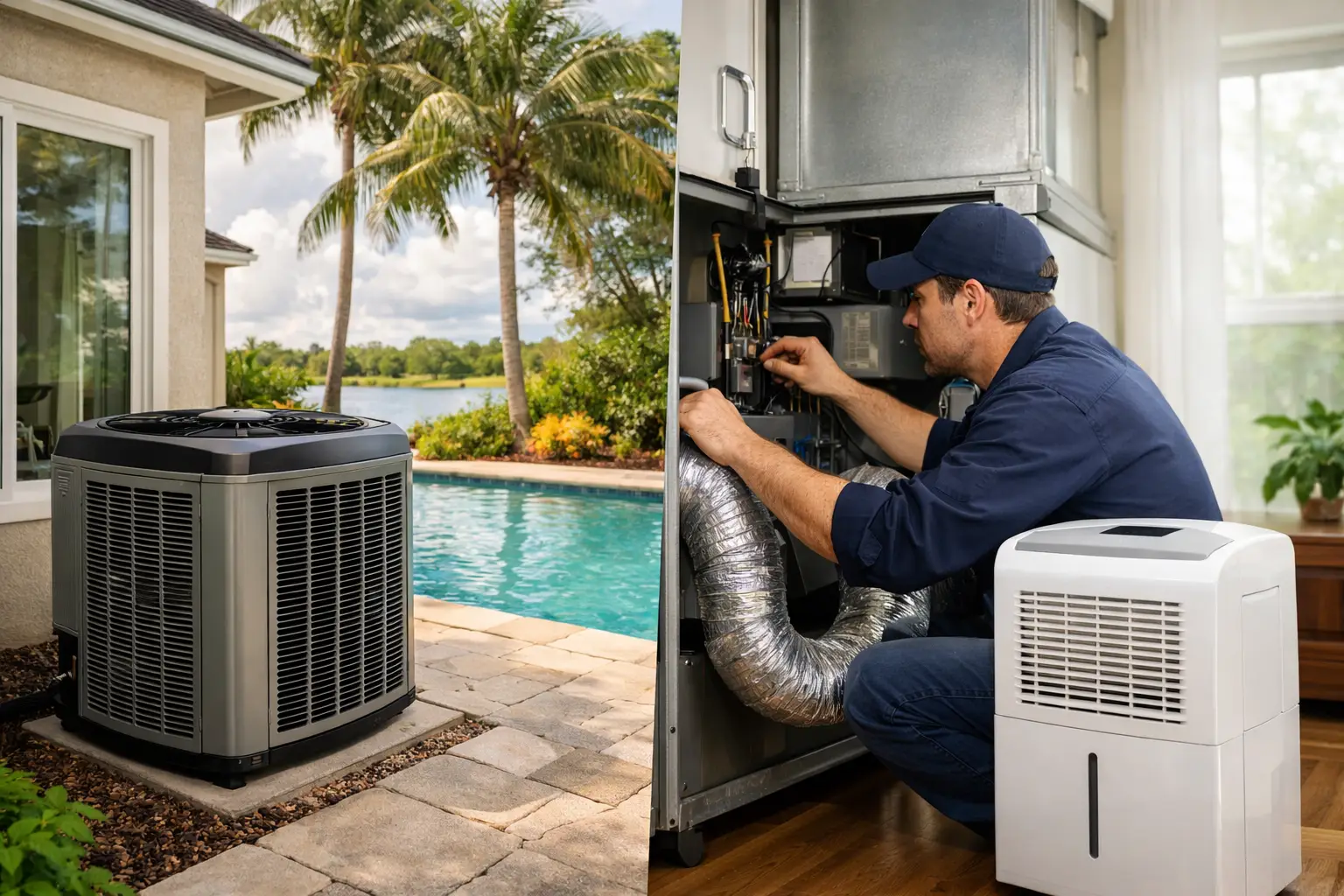
A Florida home can feel sticky even when the thermostat says 72 degrees. That is usually a humidity problem, not simply an air-conditioning problem. The best HVAC humidity solutions address why moisture is staying indoors, then correct the equipment, airflow, or ventilation issue causing it. For families in Tampa Bay and Central Florida, that can mean less musty odor, more comfortable sleep, cleaner-feeling air, and less pressure on the AC system.
Humidity control is not a one-size-fits-all purchase. A portable dehumidifier may help a single room, while a whole-home issue may point to an oversized AC, a drainage problem, leaky ducts, or equipment that needs professional cleaning and maintenance. The right answer starts with a clear look at what your home is telling you.
Why Your AC May Not Be Controlling Humidity
Your air conditioner does two jobs when it runs properly: it cools the air and removes moisture from it. Warm indoor air passes over the cold evaporator coil, where water vapor condenses and drains away. But that process only works when the system runs long enough, has proper airflow, and can send the collected water out through a clear drain line.
In Florida, outdoor moisture is relentless. Every time exterior air enters through gaps, poor insulation, open doors, attic leaks, or duct leaks, your HVAC system has more humidity to manage. Cooking, showering, drying clothes, and large households can add more moisture inside.
Many homeowners notice the warning signs before they know the cause. Watch for condensation on vents or windows, rooms that feel clammy, musty odors when the AC starts, visible mildew around registers, or a thermostat setting that feels much warmer than it should. These are good reasons to schedule an HVAC inspection instead of continuing to lower the thermostat.
Best HVAC Humidity Solutions by the Problem
Start with proper AC operation and maintenance
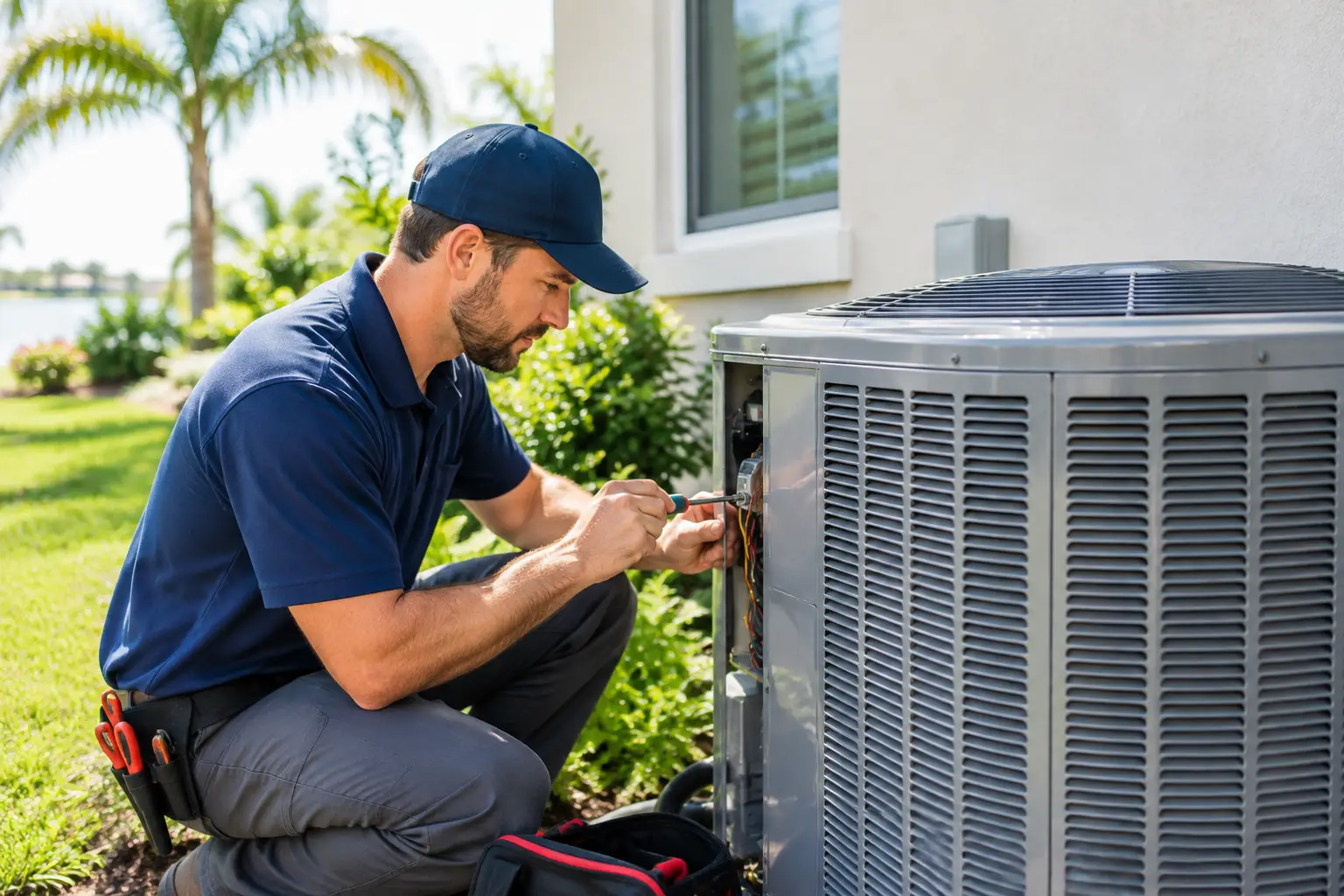
If your AC is struggling with humidity, maintenance is often the first and most cost-effective place to look. A dirty evaporator coil, clogged condensate drain, restricted filter, or blower issue can interfere with heat transfer and airflow. The system may still blow cool air, but it may not remove moisture as effectively as it should.
Coil cleaning matters because dust, biological buildup, and grime create a barrier between the air and the coil surface. A trained technician can inspect the coil, drain pan, condensate line, filter setup, and airflow condition, then explain what is affecting performance. This is especially valuable in homes where the system runs hard for much of the year.
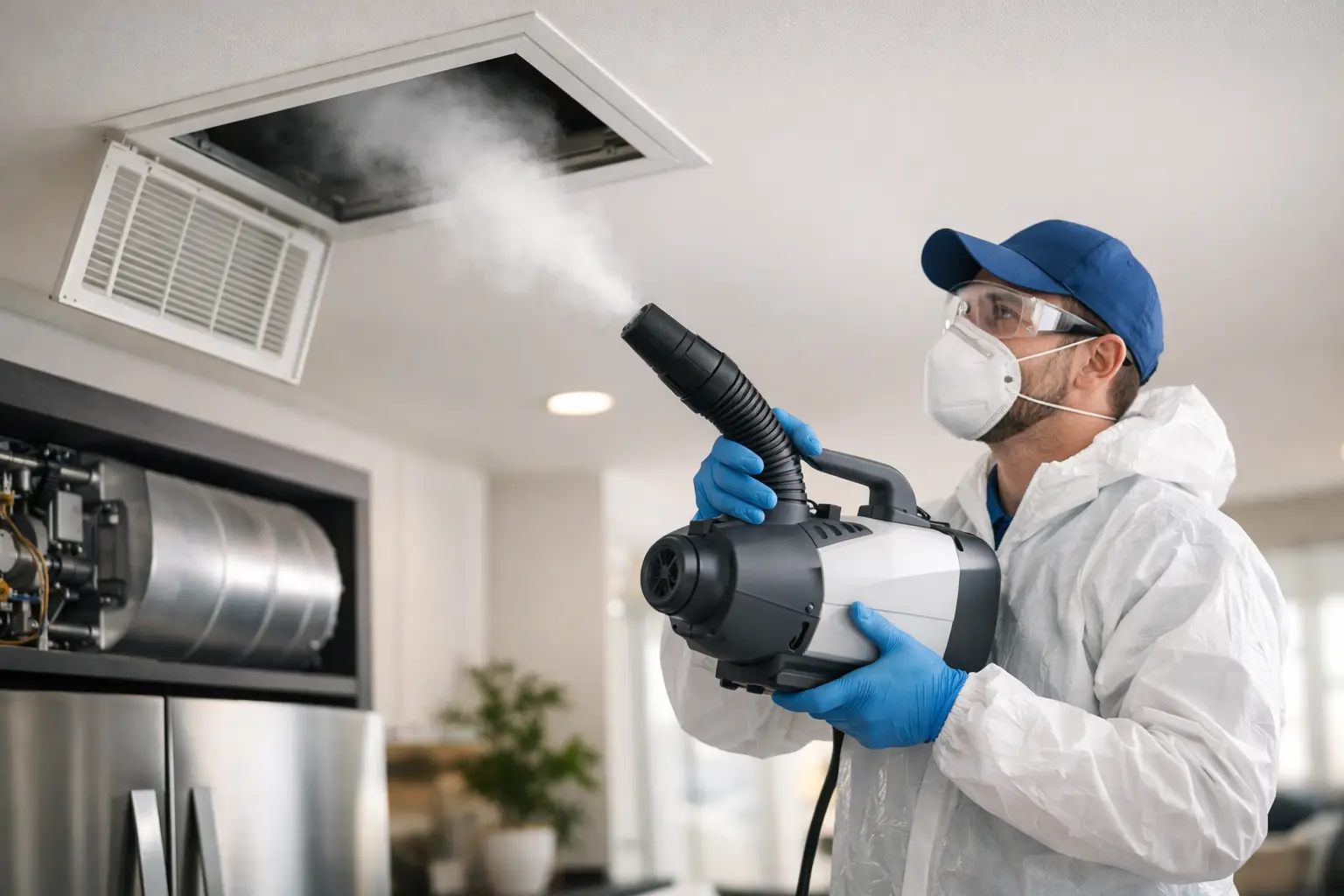
Duct cleaning is not a stand-alone humidity cure, but it can support healthier airflow when dust and debris have built up in the ventilation system. If ducts are contaminated, registers are dirty, or odors are moving through the house, a detailed inspection and mechanical cleaning can remove debris while identifying signs of moisture or microbial growth that need separate attention.
Fix an oversized or short-cycling air conditioner
A too-large AC system can cool a home quickly and shut off before it has enough time to remove much moisture. This is called short cycling, and it is common in homes where equipment was selected based on square footage alone instead of a full load calculation.
The trade-off is frustrating: the home may reach the chosen temperature fast, yet still feel damp and uncomfortable. Running the thermostat lower may increase electric bills without solving the real issue.
A qualified HVAC professional can evaluate run times, system capacity, thermostat settings, duct design, insulation, and other factors. In some cases, adjustments to fan settings or controls can improve moisture removal. In more serious cases, the long-term solution may involve correcting system sizing during replacement.
Add a whole-home dehumidifier for persistent moisture
For homes with chronic indoor humidity, a whole-home dehumidifier is often one of the most effective upgrades. It connects to the HVAC system and removes moisture from air moving through the home, rather than treating only one room at a time.
This option is especially helpful when the AC is correctly sized but cannot keep up during rainy weather, shoulder seasons, or periods when the home needs less cooling but still has high moisture levels. A dedicated dehumidifier can maintain more consistent comfort without forcing the AC to run solely for humidity control.
Whole-home equipment costs more upfront than a portable unit and needs correct installation, drainage, and maintenance. Still, it offers cleaner-looking operation, quieter performance, and broader coverage for many larger Florida homes. The best system capacity depends on the home’s size, moisture load, and existing HVAC setup.
Use a portable dehumidifier for a targeted area
A portable dehumidifier can make sense for a garage conversion, laundry room, bedroom, closet, or a single area with occasional dampness. It is a practical short-term solution while you arrange an inspection, and it may be all that is needed for an isolated issue.
However, a portable unit requires regular emptying or a drain connection, cleaning, and enough space for air circulation. It also does not solve moisture entering through leaky ducts, a blocked AC drain, poor bathroom ventilation, or a system-wide comfort problem. If you are running several portable units around the home, it is time to look for the source.
Seal duct leaks and reduce unconditioned air intrusion
Leaky ductwork can pull hot, humid air from attics, garages, crawlspaces, and wall cavities into the conditioned air stream. In Florida attics, that air can carry significant moisture along with dust and insulation particles. It makes the AC work harder and can leave certain rooms warmer or more humid than others.
A professional inspection can identify disconnected ducts, damaged insulation, loose boots, and obvious leakage concerns. Proper duct sealing and insulation can improve comfort, protect airflow, and reduce the amount of outdoor moisture your HVAC system must remove.
This solution is often overlooked because the ducts are hidden. Yet it can make a meaningful difference when one side of the home feels damp, dusty, or difficult to cool.
Improve exhaust ventilation where moisture begins
Bathrooms, kitchens, and laundry areas create moisture quickly. Exhaust fans should vent outdoors, not into an attic or another enclosed space. A bathroom fan that is weak, rarely used, or improperly vented allows humidity to spread through the home after every shower.
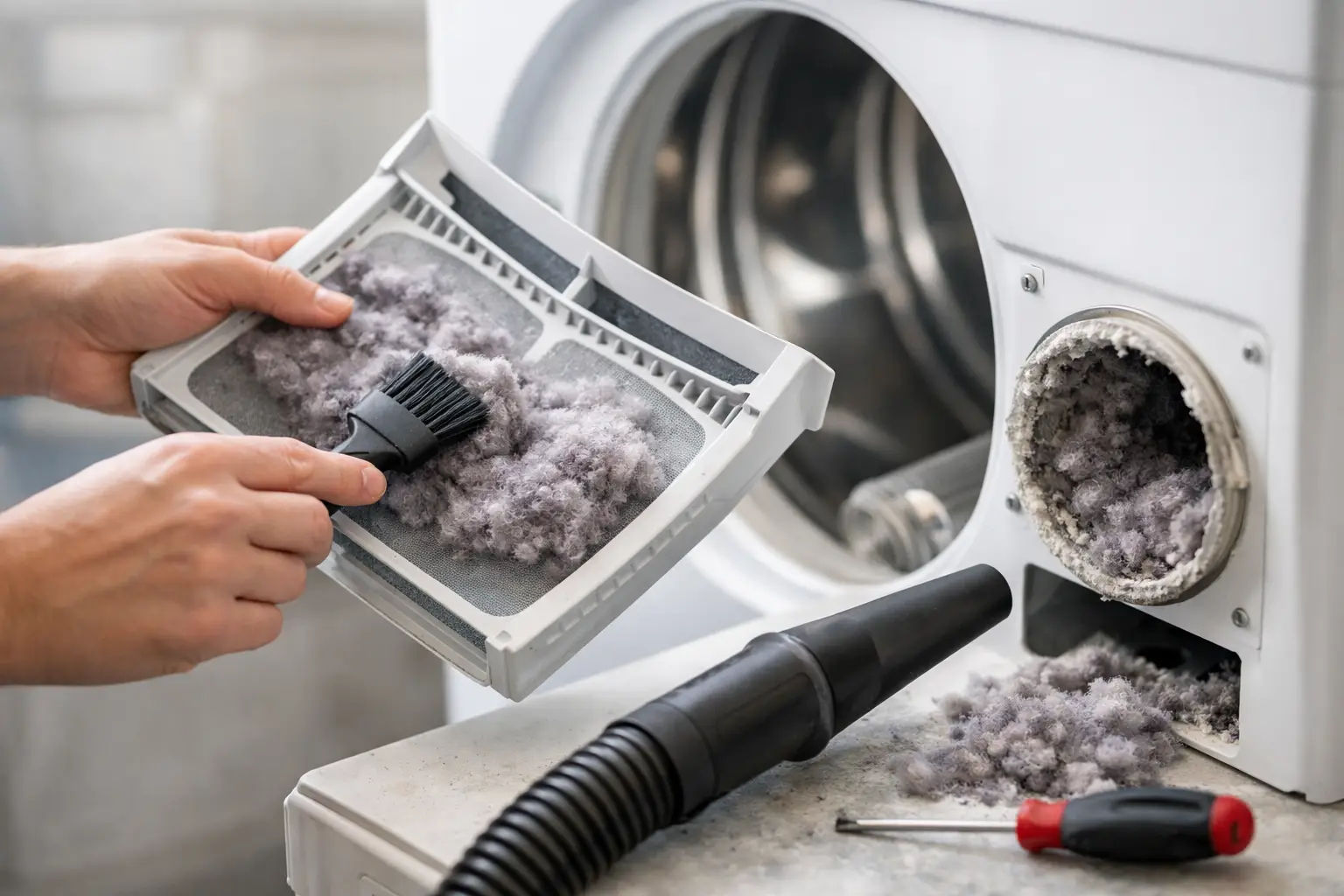
Use bathroom exhaust fans during showers and for roughly 15 to 20 minutes afterward. Run the kitchen exhaust when boiling water or cooking with steam. Make sure the dryer vent is clear and properly routed outdoors, because a blocked or damaged dryer vent can add heat and moisture while also creating a serious fire risk.
What Indoor Humidity Level Should You Aim For?
Most homes are comfortable when indoor relative humidity stays around 40% to 55%. In Florida, maintaining the lower end of that range may not always be practical without the right equipment, but consistently reaching 60% or higher can encourage musty odors, condensation, and mold-friendly conditions.
A simple hygrometer gives you a useful starting point. Place it away from supply vents, exterior doors, and direct sunlight. Check readings at different times of day and in rooms where problems are most noticeable. If the number stays high while the AC is running normally, document what you see for the technician.
When Humidity Could Be a Mold or Air Quality Concern
Moisture alone does not confirm mold, but persistent damp conditions deserve attention. Visible growth, recurring odors, water stains near vents, wet insulation, or unusual debris around registers should not be covered up with air fresheners or ignored.
The right next step is an inspection that looks beyond the vent opening. A trained team can assess accessible ductwork, coils, drain components, and affected areas, explain what they find, and recommend cleaning, sanitization, or mold remediation when appropriate. Photo documentation and clear findings help homeowners make decisions based on the condition of the system rather than guesswork.
For homeowners dealing with dusty vents, musty AC odors, restricted airflow, or recurring moisture concerns, The Ductors can help identify whether your HVAC system needs cleaning, coil service, sanitization, or a more targeted humidity-control recommendation.
A comfortable home should not feel clammy, smell musty, or require you to keep lowering the thermostat. Start with an inspection, address the source of the moisture, and give your family cleaner, drier air to come home to.