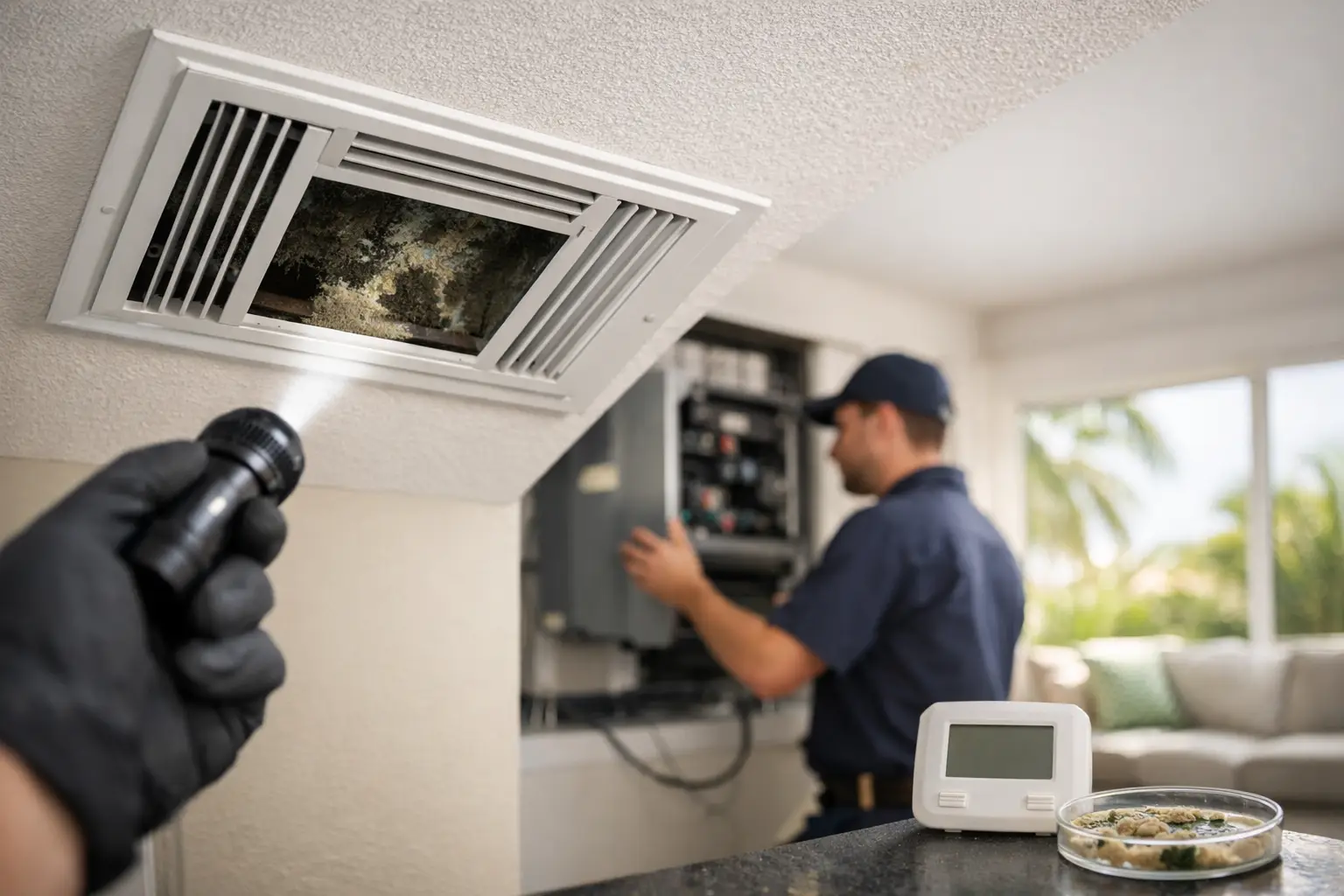
That musty smell when the AC starts is not something Florida homeowners should learn to live with. Knowing how to prevent HVAC mold starts with controlling the moisture your air-conditioning system creates and removing the dust that gives mold a place to grow. In Tampa Bay and Central Florida, where AC systems work hard for much of the year, small maintenance issues can turn into indoor air quality concerns quickly.
Mold needs moisture, a food source, and time. Your HVAC system can provide all three when condensation sits in a drain pan, a clogged filter restricts airflow, or damp dust collects on coils and inside ducts. The good news is that most HVAC mold problems are preventable with consistent attention to drainage, humidity, airflow, and professional cleaning when the system shows signs of buildup.
Why Florida HVAC Systems Are Prone to Mold
Your AC does more than cool the house. As warm, humid indoor air passes over the cold evaporator coil, water vapor condenses and should drain safely away through the condensate line. That moisture removal is one reason air conditioning feels so comfortable in Florida.
Problems begin when that water does not leave the system as designed. A partially blocked drain line, dirty coil, overflowing drain pan, or improperly operating system can leave damp surfaces inside the air handler. Add dust, pet dander, and organic debris, and mold has the conditions it needs to spread.
High outdoor humidity also raises the stakes. Opening windows during muggy weather, running an oversized AC that cools the home too quickly, or setting the thermostat too high while away can allow indoor humidity to climb. A cool home can still be too humid, so temperature alone is not a reliable indicator of mold risk.
Keep Humidity in the Healthy Range
For most homes, indoor relative humidity should generally stay between 30% and 50%. In humid Florida conditions, aiming near the middle of that range can be difficult without a properly functioning AC system, but it is a worthwhile goal. A simple digital hygrometer gives you a clear reading instead of forcing you to guess based on how the house feels.
If humidity regularly stays above 55%, look for the cause rather than relying only on a portable dehumidifier. The AC may be oversized, short-cycling, low on proper airflow, or struggling with a dirty coil. Moisture may also be entering through duct leaks, bathroom exhaust issues, crawl spaces, or poorly sealed doors and windows.
Use bathroom exhaust fans during showers and kitchen ventilation when cooking. Make sure those fans vent outside rather than into an attic or enclosed space. If one part of the home stays damp while the rest feels comfortable, a whole-home dehumidifier or a targeted HVAC evaluation may make more sense than running multiple room units.
Protect the Condensate Drain and Drain Pan
The condensate drain line is one of the most common places for HVAC mold and slime buildup. As water travels through the line, algae, dust, and biological growth can create a blockage. When the line backs up, the pan can overflow, damaging ceilings and creating long-lasting moisture around the air handler.
Check the area around your indoor unit periodically. Standing water, rust in the drain pan, water stains, or a float switch that repeatedly shuts off the AC all deserve prompt attention. Do not ignore a system that stops cooling because the safety switch has activated. It may be preventing a much larger water problem.
Homeowners can keep the drain outlet outside clear of leaves and soil, but avoid forcing objects into the line or using harsh chemicals that can damage components. A professional maintenance visit can clear the line properly, inspect the pan, verify drainage, and identify whether a recurring clog points to a larger issue such as poor drain slope or coil contamination.
Change Filters Before Airflow Suffers
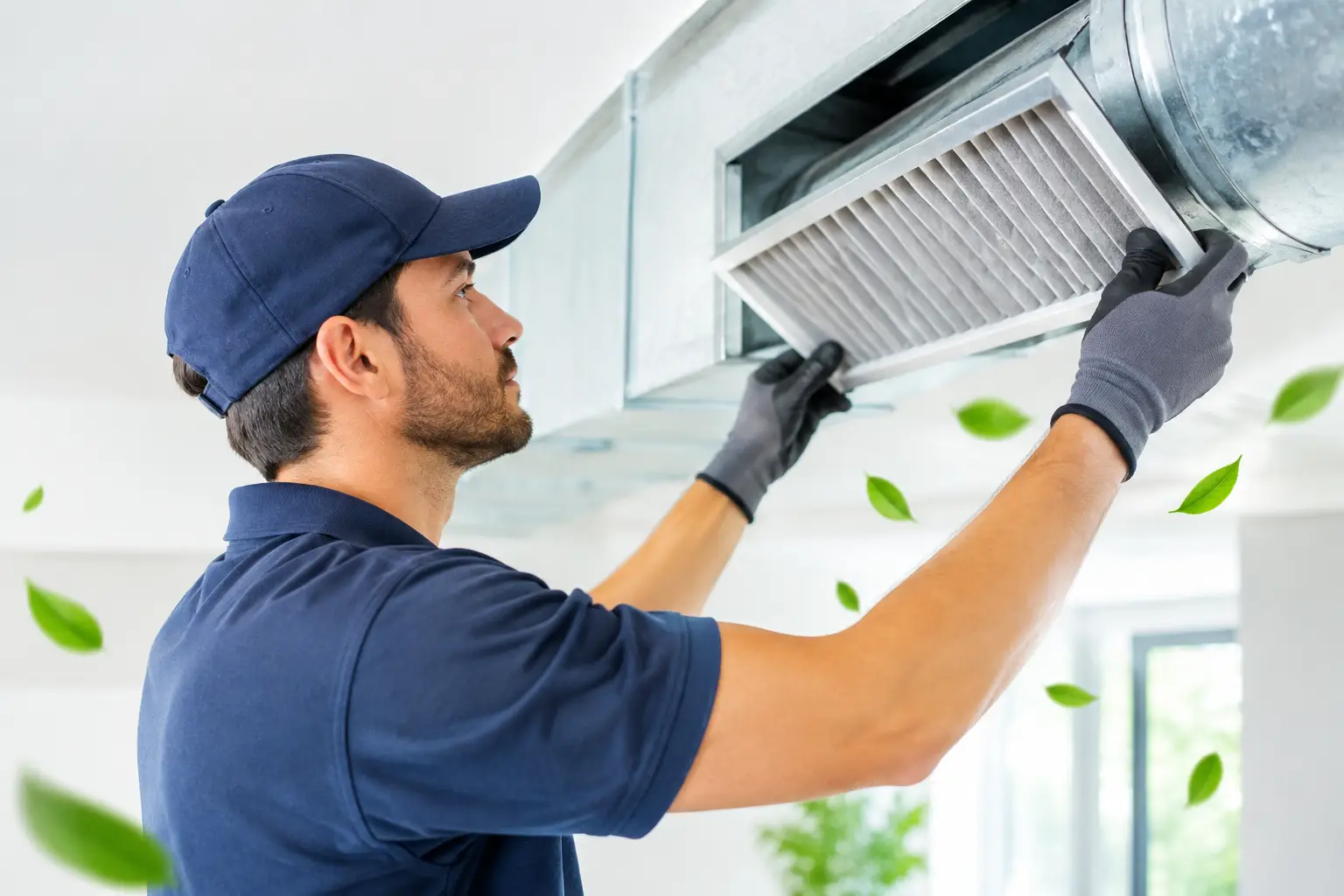
A dirty filter does not just make the system work harder. It reduces airflow across the evaporator coil, which can affect how the system manages humidity and may contribute to coil freezing. It also allows more dust to settle where you do not want it: on the coil, in the blower compartment, and eventually in the duct system.
Check your filter monthly, especially during heavy cooling months, and replace it based on its condition and manufacturer guidance. Many homes need replacement every one to three months, though pets, renovations, allergies, and frequent AC use can shorten that interval.
Do not assume the most restrictive filter is always best. A very high-rated filter can strain some residential systems if it is not sized correctly for the equipment. The right choice depends on your return grille, filter cabinet, system design, and household needs. If airflow seems weak after changing filters, ask an HVAC professional to recommend a compatible option.
Keep Coils, Ducts, and Supply Vents Clean
The evaporator coil sits inside the air handler, where it is hard to see but central to both cooling and moisture control. When a coil is coated in dust and debris, it cannot transfer heat efficiently. The system may run longer, use more electricity, and struggle to remove humidity from the air.
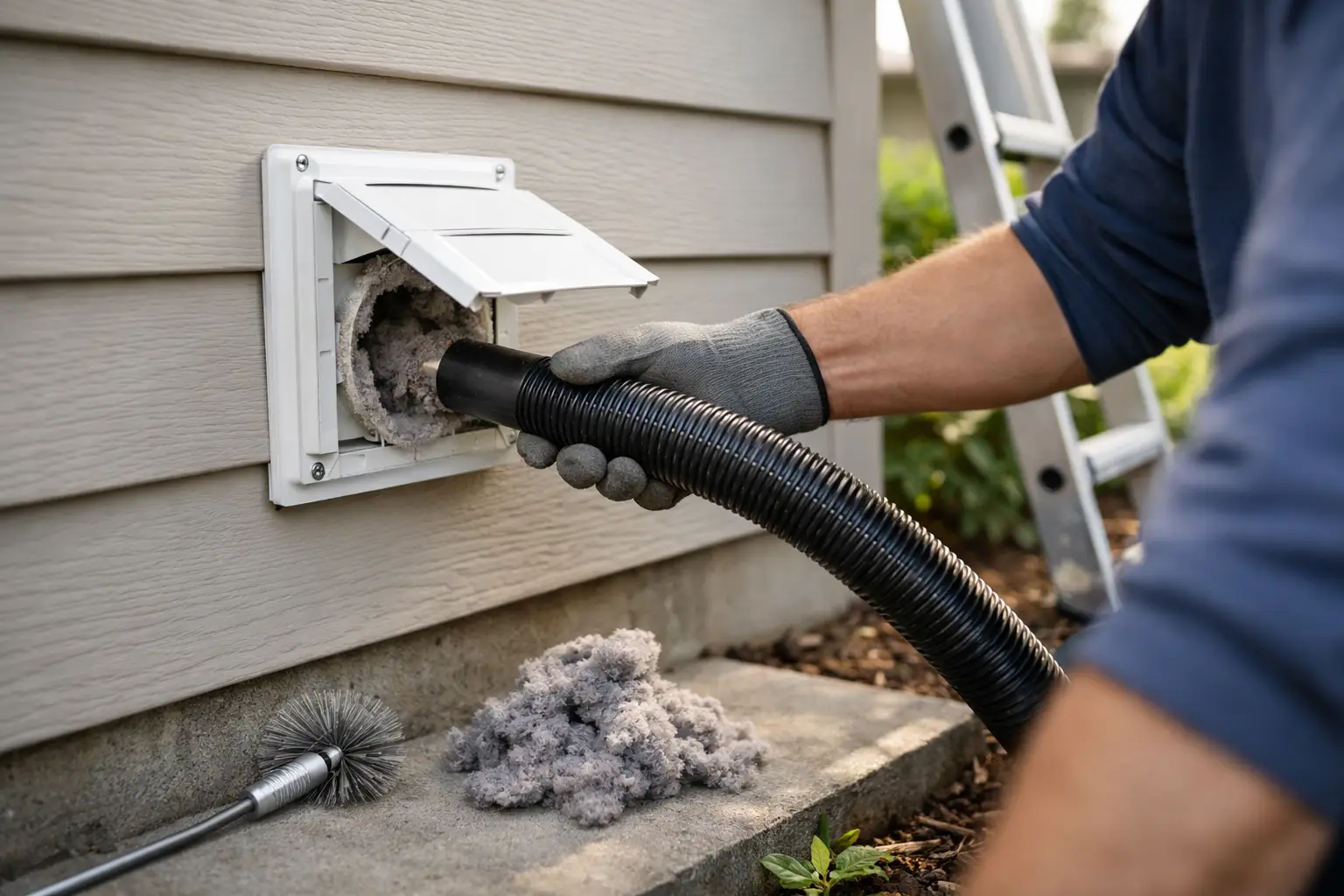
Ductwork can also collect dust over time, particularly in homes with leaky ducts, construction debris, shedding pets, or years of heavy AC use. Dust alone does not always mean mold is growing in ducts. However, when dust combines with moisture, musty odors, visible growth around vents, or contamination near the air handler, an inspection is the smart next step.
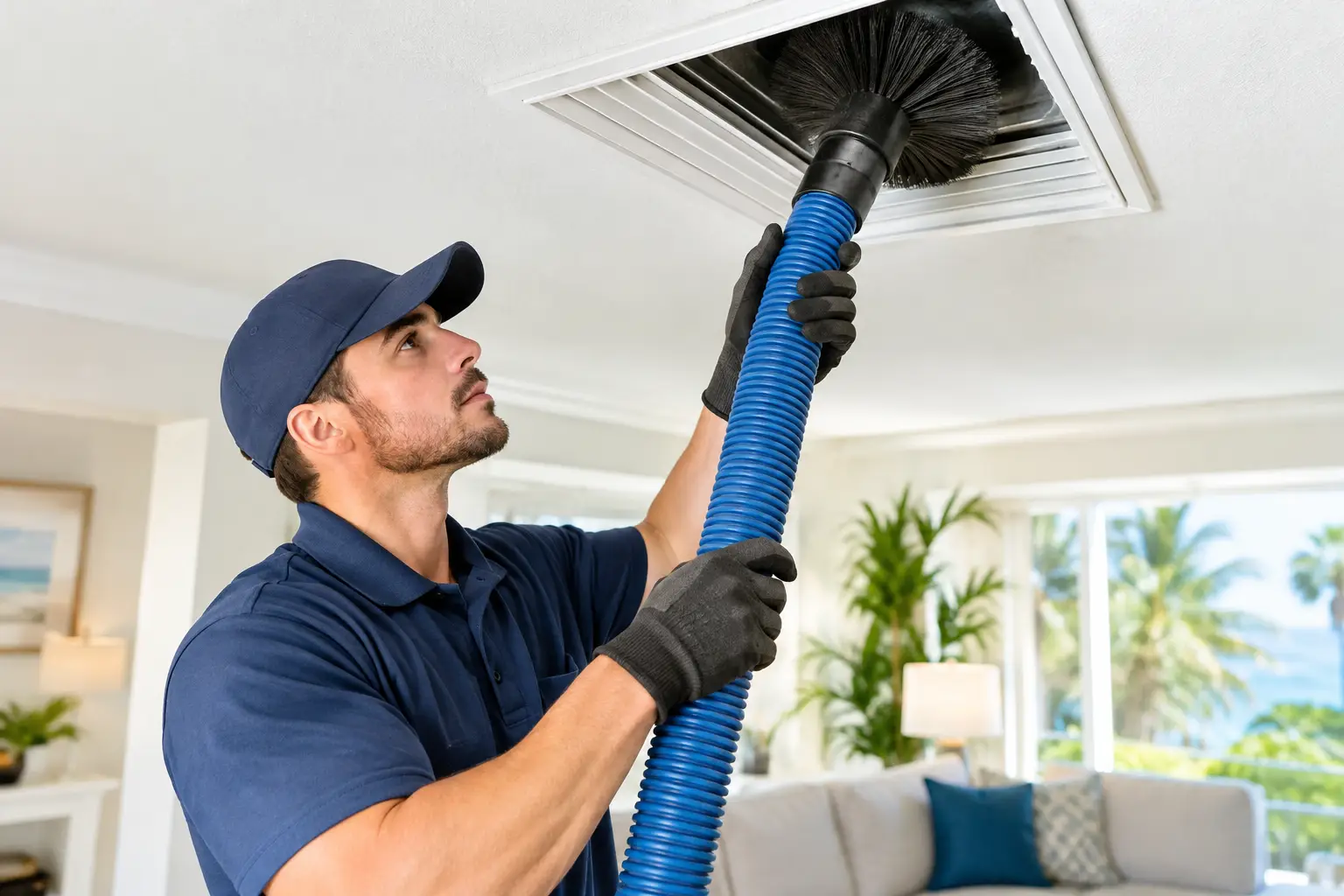
Avoid spraying household disinfectants into vents or fogging products through the system without understanding the source of the problem. Sanitizers are not a substitute for removing buildup or correcting the moisture condition that caused it. A proper service should begin with an inspection, use mechanical cleaning where needed, and include clear explanations and photo documentation of what was found.
Watch for Early Warning Signs
HVAC mold is not always visible from a supply vent. Pay attention to changes that occur when the system runs, especially after the AC has been off for several hours. Common warning signs include:
- A musty, sour, or dirty-sock odor when cooling begins
- Water near the indoor air handler or stains around ceilings and walls
- Recurring dust around vents or dark spotting on vent covers
- Persistent indoor humidity, condensation on surfaces, or clammy rooms
- More allergy-like irritation indoors, including coughing, sneezing, or eye irritation
These signs do not prove that mold is inside your ductwork. Odors can come from a dirty coil, a drain issue, wet insulation, plumbing leaks, or a separate moisture source in the home. That is why a trained inspection matters. It helps you address the actual condition rather than spending money on a one-size-fits-all treatment.
Use UV Lights for the Right Application
UV lights can be a useful added layer of protection in certain HVAC systems, especially near coils and drain pans where moisture is present. They are designed to help limit microbial growth on illuminated surfaces. They do not remove dust, repair a drainage problem, or clean contaminated ductwork.
Think of UV technology as prevention after the basics are handled. If the coil is dirty or the drain line is backing up, clean and correct those issues first. A professional can also determine whether the light is installed in a position that will serve the coil effectively and explain bulb replacement needs over time.
Build a Maintenance Routine That Fits Your Home
The best answer to how to prevent HVAC mold is not a single product. It is a routine that catches moisture and airflow problems before they affect your family’s comfort. Check filters monthly, monitor humidity, keep supply and return vents unobstructed, and look around the air handler for water or unusual odors.
Schedule professional HVAC maintenance at least annually, and consider more frequent attention if your home has pets, occupants with allergies, an older system, or a history of drain clogs and moisture problems. If you notice musty odors, visible buildup, or weak airflow, do not wait for the next routine appointment. Early inspection often limits the scope of cleaning and helps protect the equipment.
For homeowners who want clear answers rather than guesswork, The Ductors can inspect the system, clean accumulated contaminants, address HVAC sanitization needs, and document the condition of the work. Clean air starts with a dry, well-maintained system – and the next time your AC turns on, the only thing you should notice is relief from the Florida heat.