When a storm knocks out power in Tampa Bay, your AC can sit off for hours or days while heat and humidity build up inside your home. That still, damp air can leave dust, odors and sometimes mold-like growth behind in your air handler and ducts. Here are straight answers to the questions homeowners ask most after a hurricane, tropical storm or long outage.
Should I check my air ducts after a hurricane or power outage?
Yes. A quick check after any long outage or storm is a smart habit, especially in our humid climate.
When the AC is off, nothing is pulling moisture out of the air. Indoor humidity can climb fast in a closed-up Florida house, and that moisture settles on cool metal surfaces, drain pans and duct liner. Storms can also push debris, pollen and outdoor dust into returns and attics. Most of the time the fix is simple, but it’s worth looking before small problems turn into lingering smells.
Is it safe to turn my AC back on after the storm?
If your home stayed dry and the equipment wasn’t damaged, it’s usually fine to restart once power is stable. If water reached the air handler, outdoor unit or ductwork, have it inspected before you turn it on.
Flood water can carry dirt, sewage and bacteria, and it can damage electrical parts. Running a system that sat in water can spread contaminated air through the house or create an electrical hazard. When in doubt, leave the system off and call an HVAC technician to look at the equipment first.
What signs mean my ducts or air handler need attention?
A musty smell when the AC starts, visible dark spots on vents, or more dust than usual are the most common signs.
- Musty or sour odor that shows up when the system kicks on and fades after a few minutes.
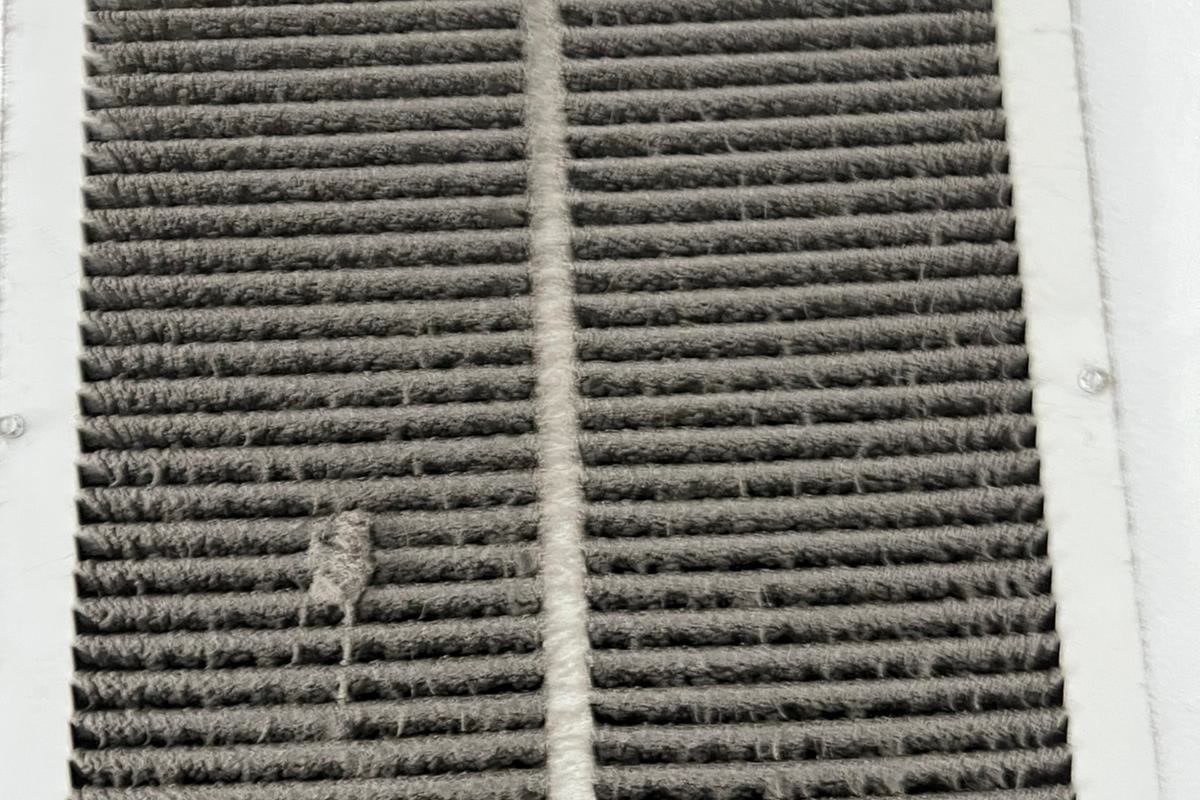
- Dark spotting or fuzz on supply vents, return grilles or the inside of the air handler cabinet.
- Standing water or slime in the condensate drain pan, or a drain line that backs up.
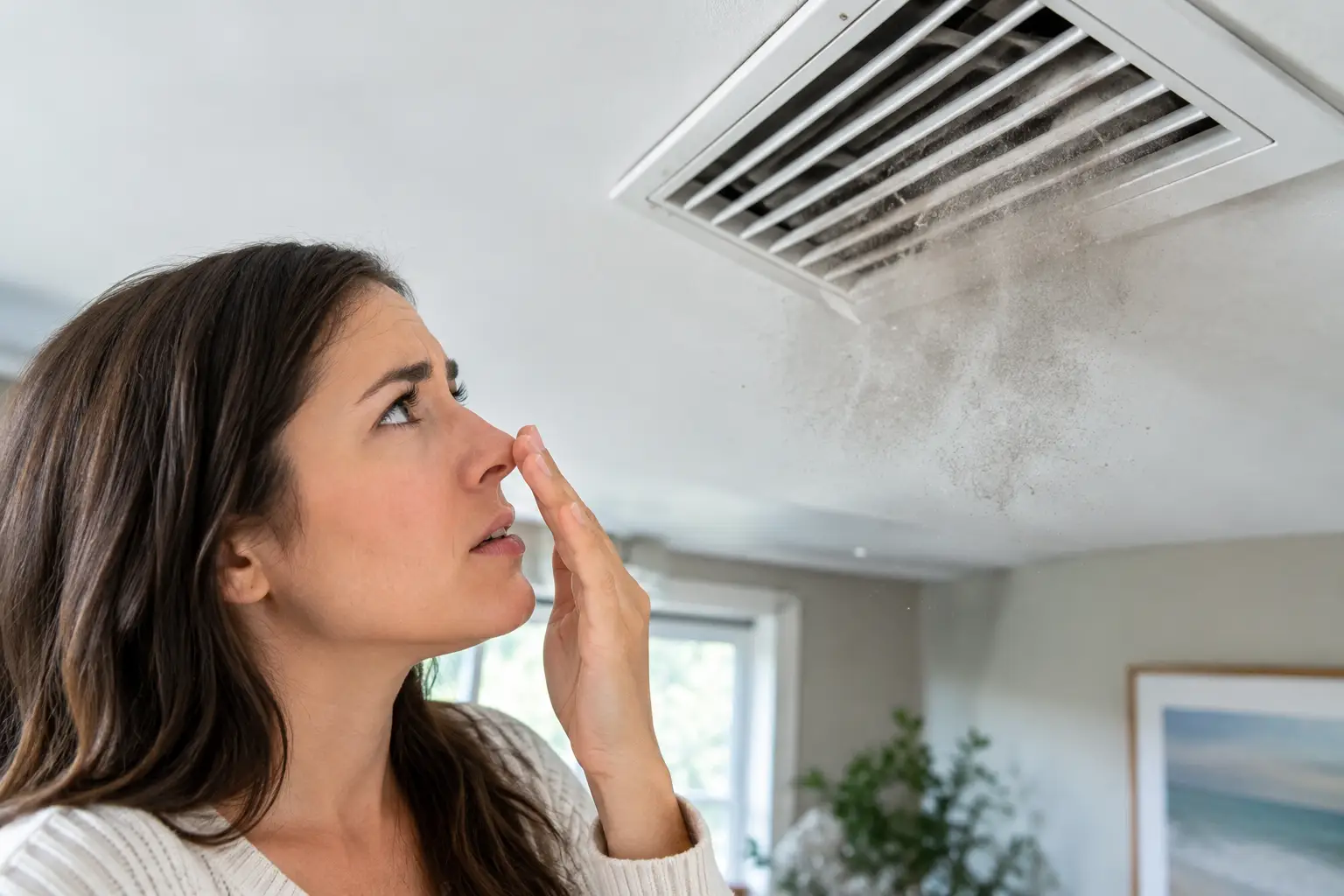
- Dust puffing out of vents after storm winds pushed debris into the house or attic.
- Weak airflow from a clogged filter, a blocked return or a disconnected duct in the attic.
Is that dark stuff on my vents mold?
It might be, but it can also be dust mixed with condensation. You can’t always tell by looking.
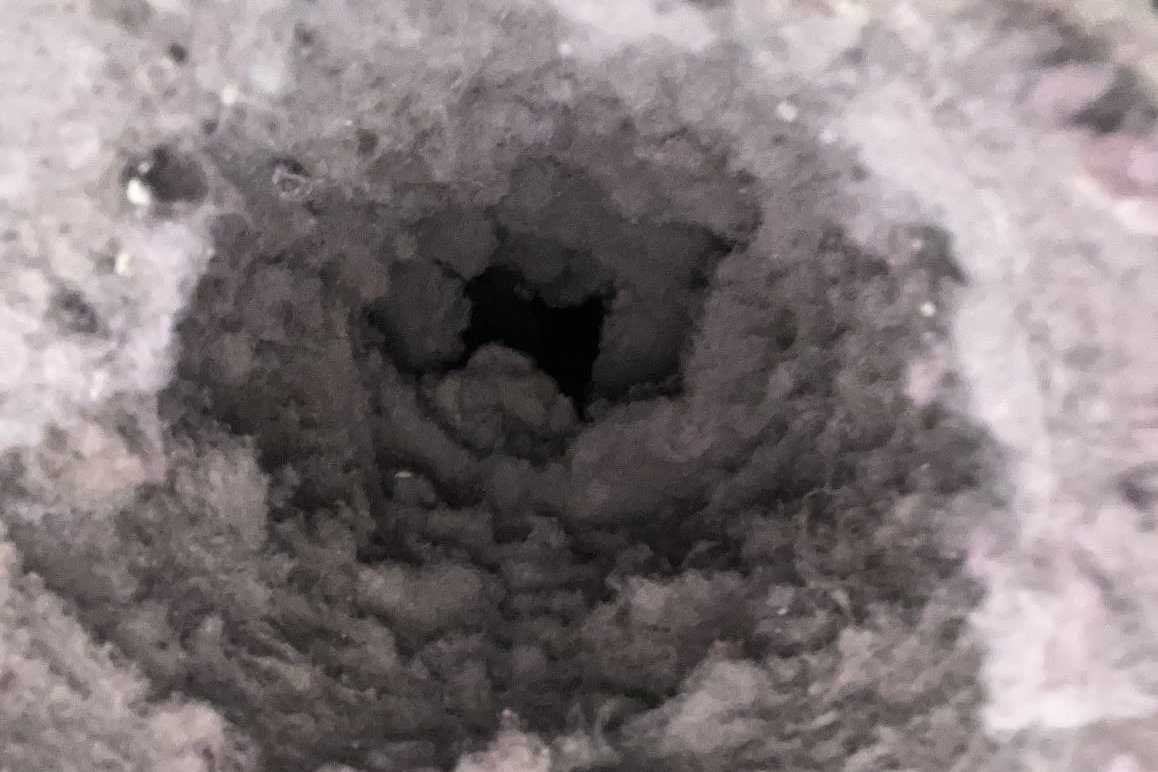
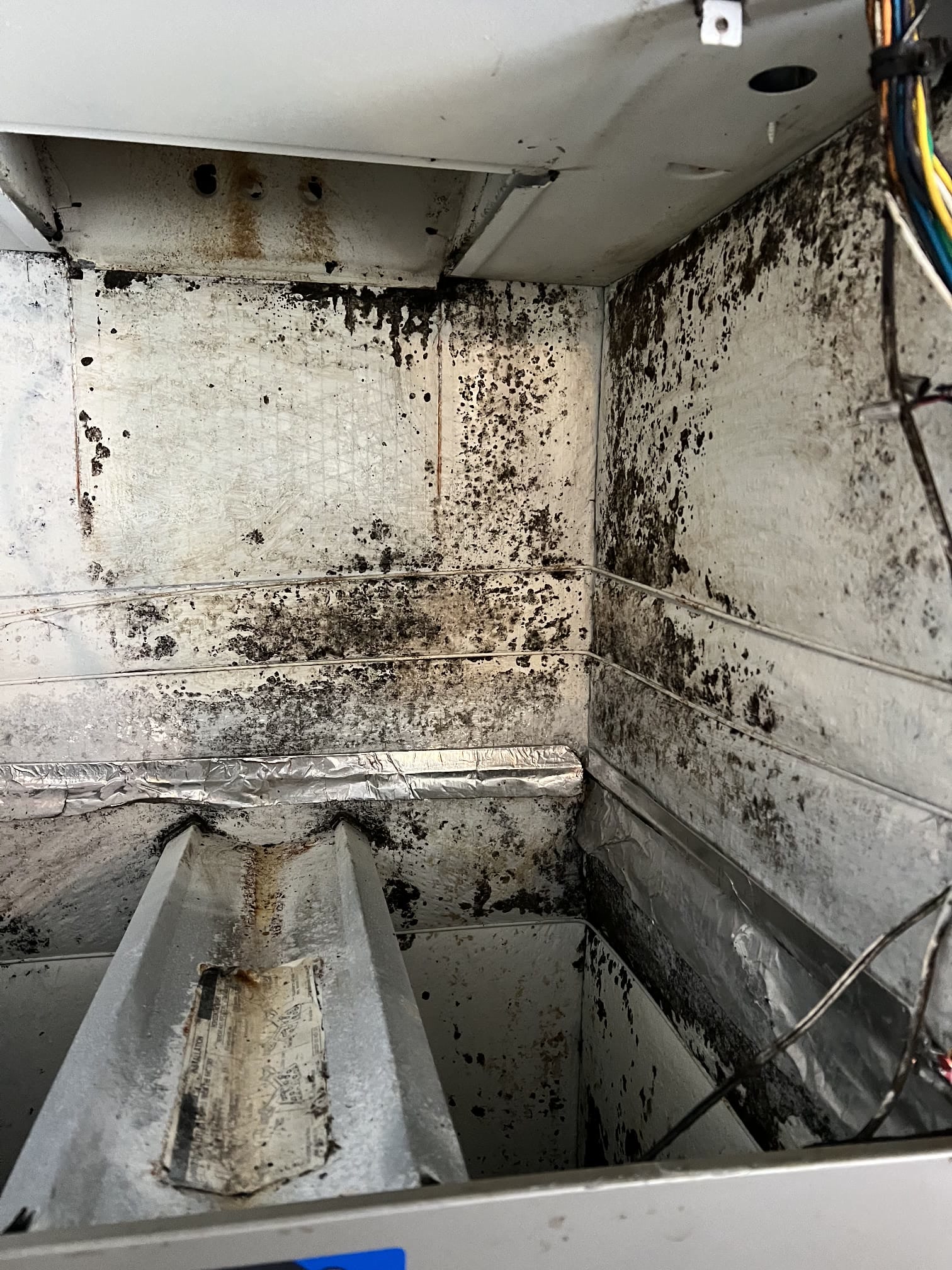
Black spots right around a supply vent often come from cold, damp air meeting warm, humid room air, which leaves moisture on the grille where dust sticks. Sometimes that turns into actual growth. If you see dark buildup inside the air handler or on the duct liner, like the air handler shown with this article, it’s a sign moisture has been sitting in the system and it deserves a closer look.
Why does Tampa Bay humidity make this worse?
Our air holds a lot of moisture for much of the year, so any time the AC stops running, damp air has a chance to settle inside the system.
Your AC normally removes humidity as it cools. During an outage, that stops. Add rain coming in under doors, wet carpets, or a damp attic after roof damage, and the air handler closet can stay humid for days. That’s why homes around Tampa, Brandon, Riverview and the rest of the Bay area often notice musty smells right after storm season.
What can I do myself after the power comes back?
Start with the filter, the drain line and a sniff test. Those three steps catch a lot of common problems.
- Replace the air filter. Storms and outages often leave filters loaded with dust or damp.
- Check the condensate drain. Make sure water is draining and the pan isn’t holding standing water.
- Run the AC and pay attention. Note any musty smell, rattling or weak airflow from specific rooms.
- Look at the vents. Wipe grilles and see if dark spots come right back.
- Dry the house out. Remove wet materials, run fans and keep the AC on to pull humidity down.
When should I call for professional duct cleaning?
Call when odors keep coming back, you see buildup inside the air handler or ducts, or storm debris got into the system.
Our HVAC and air duct cleaning service cleans the ductwork and key HVAC components, including supply and return vents, the air handler cabinet, the blower and the drain pan area. We serve homeowners across the area, including our Tampa air duct cleaning customers and neighbors in Brandon, Riverview, Wesley Chapel and Clearwater.
Does duct cleaning get rid of mold?
Cleaning removes dust, debris and buildup from the ducts and HVAC parts we clean, but it isn’t a fix for mold growing in walls, ceilings or other parts of the house.
We focus on your air ducts and HVAC system. If there’s water damage or growth beyond the HVAC system, such as on drywall, under flooring or in the attic, we recommend having a mold professional assess it. Fixing the moisture source is usually the most important step, since buildup tends to return if the area stays damp.
Can a dirty system affect how my home feels?
It can. Dust and musty air can make a home feel stuffy, and some people notice they’re more uncomfortable when the air smells stale.
Everyone reacts differently, and we can’t promise any health result from cleaning. If you or a family member has breathing concerns, talk with your doctor. What we can do is help remove the dust and buildup from your system so the air coming out of your vents isn’t carrying it.
Get your system checked after the storm
If your AC smells musty, your vents look dark, or storm debris got into your home, The Ductors can take a look at your ducts and HVAC components and show you exactly what we find. Call us at (656) 236-4254 to schedule air duct cleaning anywhere in Tampa Bay.