A practical, expert-backed guide to dryer vent cleaning frequency, fire prevention, and what to expect from professional service.
Key Takeaways (TL;DR)
- Clean your dryer vent at least once a year. This is the baseline recommendation from fire safety experts and most appliance manufacturers.
- Clean every 6 months if you have heavy laundry volume, a large household, shedding pets, or a long, winding vent run.
- Lint buildup is the single leading cause of dryer fires in the United States, responsible for roughly one-third of them, according to the National Fire Protection Association (NFPA) and the U.S. Fire Administration (USFA).
- Florida homes often need more frequent attention. High humidity, year-round laundry, and coastal conditions can accelerate lint buildup and slow drying.
- Professional dryer vent cleaning costs $100 to $250 nationally, with most homeowners paying around $130 to $150. The fee is small next to the cost of a fire.
- Watch for the warning signs: clothes taking two cycles to dry, a hot dryer cabinet, a burning smell, or weak airflow at the outside vent. Any of these means it is time to clean.
The Short Answer: How Often Should You Clean a Dryer Vent?
Once a year, at minimum.
That single annual cleaning is the standard dryer vent cleaning frequency recommended by fire safety organizations and dryer manufacturers alike. For many households, though, once a year is not enough.
The right frequency depends on how much you dry, what you dry, who lives in your home, and how your vent is built. The table below breaks it down.
Recommended Cleaning Frequency by Household Type
| Household or condition | Suggested cleaning frequency |
|---|---|
| Single person or couple, light dryer use | Once a year |
| Average family, regular weekly laundry | Once a year |
| Large family or daily multiple loads | Every 6 months |
| Homes with shedding pets | Every 6 months |
| Long or winding vent run (multiple bends, roof or second-floor exit) | Every 6 months |
| You dry bulky items often (towels, blankets, comforters) | Every 6 to 9 months |
| You notice any warning sign (see below) | Immediately, regardless of last cleaning |
The simple rule of thumb: the more lint your laundry produces and the harder your vent has to work to clear it, the more often you should clean.
Why Dryer Vent Cleaning Is a Fire Safety Issue, Not Just a Chore
Lint is soft, fluffy, and surprisingly dangerous. It is highly flammable, and it collects steadily inside the vent line every time you run a load.
When lint builds up, it restricts airflow. The dryer then runs hotter and longer to do the same work. Heat, trapped lint, and limited ventilation turn an ordinary appliance into a genuine fire hazard.
There is a second, less obvious danger. With a gas dryer, a blocked vent can allow carbon monoxide to back up into your home instead of venting safely outside. That makes a clear vent a matter of air safety as well as fire safety.
What the National Data Shows
The numbers make the case better than any sales pitch can.
- U.S. fire departments respond to an estimated 13,000 to 16,000 home fires each year involving clothes dryers and washing machines, according to the NFPA. Dryers account for the large majority of these incidents.
- Failure to clean is the leading contributing factor, cited in roughly one-third of dryer fires by both the NFPA and the USFA. In other words, a large share of these fires are preventable with routine maintenance.
- Over a recent five-year span, NFPA data attributed an annual average of about 13 deaths, more than 400 injuries, and over $200 million in property damage to these fires.
- Despite this, surveys suggest only a minority of homeowners clean their dryer vents annually, and a meaningful share have never cleaned theirs at all.
The takeaway is straightforward. Lint buildup is the most common, and most preventable, cause of dryer fires. Routine cleaning removes the fuel before it can ignite.
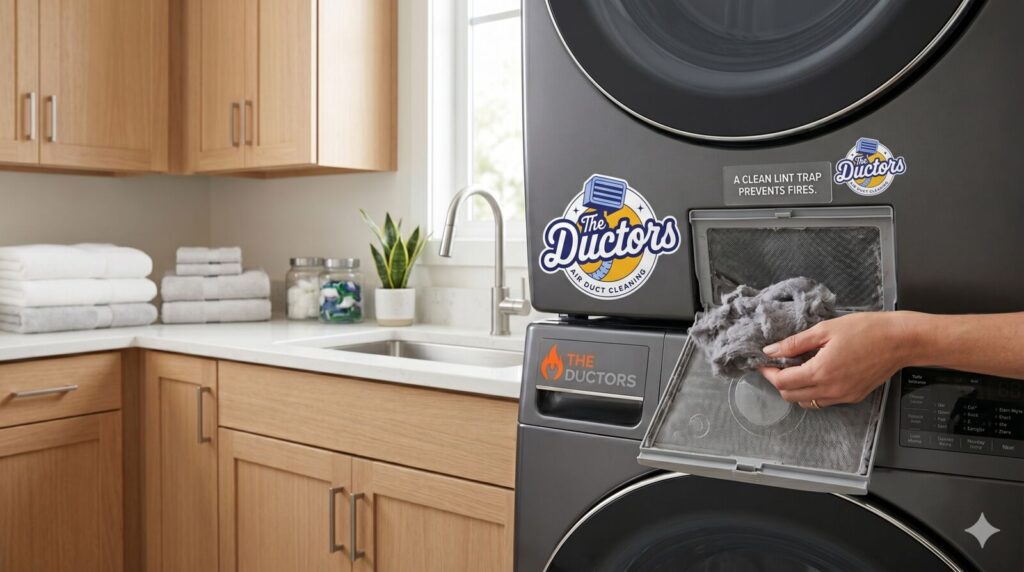
Important: Emptying the lint trap after every load is essential, but it is not the same as cleaning the vent. Most lint that creates fire risk collects deeper in the duct, well past the lint trap.
The Florida Factor: Why Tampa Homes May Need More Frequent Cleaning
Most national advice assumes an average climate. Florida is not average, and that matters for your dryer vent.
- Humidity makes dryers work harder. When the surrounding air is heavy with moisture, clothes can take longer to dry, which means longer cycles and more lint shed per load over time. That works against your dryer efficiency.
- Laundry runs year-round. There is no seasonal slowdown for laundry in a warm climate. Heavy use through every month of the year adds up faster than in regions with lighter seasonal patterns.
- Coastal and suburban conditions add risk. Outdoor vent hoods near the Gulf can attract nesting birds and insects, and salt air can wear on vent components. Both can quietly restrict the airflow your dryer depends on.
For these reasons, many Tampa Bay households benefit from more frequent dryer vent inspection and cleaning than the once-a-year national baseline, especially larger families and homes with long duct runs.

7 Warning Signs Your Dryer Vent Needs Cleaning Now
Your dryer usually tells you when the vent is clogged. Learn to read the signals.
- Clothes take two cycles to dry. This is the most common and most overlooked sign. If a single load no longer dries in one cycle, suspect the vent first.
- The dryer cabinet feels hot to the touch. Excess heat at the top or sides means heat is not escaping the way it should.
- A burning or musty smell during operation. A hot, scorched smell can mean lint is heating up inside the line. A musty smell can mean trapped moisture.
- Weak or no airflow at the outside vent hood. With the dryer running, you should feel strong warm air at the exterior vent. Weak airflow points to a blockage.
- The dryer shuts off mid-cycle. Many modern dryers have a safety cutoff that trips when the unit overheats from restricted airflow.
- Visible lint around the vent opening or behind the dryer. Lint escaping where it should not be is a clear sign of backup in the system.
- It has simply been more than a year. If you cannot remember the last cleaning, it is overdue.
Any one of these is reason enough to schedule a cleaning, no matter how recently the vent was last serviced.

Dryer Vent Safety Tips: Simple Habits That Prevent Fires
Good dryer vent maintenance is mostly about consistent habits. These dryer vent safety tips go a long way toward dryer vent fire prevention.
- Clean the lint trap before or after every single load. It is the easiest habit and the first line of defense.
- Schedule professional dryer vent cleaning on a regular cycle, at least annually, so deep lint buildup never has a chance to accumulate.
- Use the right ductwork. Rigid or semi-rigid metal dryer ductwork is far safer than plastic or foil accordion-style ducts, which sag and trap lint. Where a short transition connector is needed, a flexible metal vent duct is the safer choice. Avoid plastic and vinyl entirely.
- Keep working smoke detectors near the laundry area and test them monthly. They are inexpensive and they save lives.
- Do not run the dryer while you are asleep or away from home. Most dryer fires are far less dangerous when someone is present to react quickly.
- Keep the area around the dryer clear of boxes, clothing, and cleaning products.
- Handle light upkeep between services with a dryer vent cleaning brush for the section nearest the dryer, but leave the full line to a professional.
What Happens During a Professional Dryer Vent Cleaning
The dryer vent cleaning process is more than running a brush near the dryer. A complete service from qualified dryer vent cleaning professionals typically includes the following steps.
- Inspection of the full vent line. The technician assesses the entire run, from the dryer connection to the exterior hood, looking for blockages, damage, and airflow problems.
- Disconnecting and moving the dryer. The unit is carefully pulled from the wall and disconnected so the full duct can be reached.
- Deep cleaning of the entire duct. Specialized rotating brush systems paired with high-powered vacuums remove compacted lint along the whole line, including bends and elbows that a household vacuum cannot reach.
- Cleaning and checking the exterior vent cap. The outside hood is cleared of lint, debris, and any nesting, and checked that it opens and closes properly.
- Verification of airflow. The technician confirms that air is moving freely before reconnecting the dryer.
A standard residential cleaning usually takes 30 to 60 minutes. Longer or roof-exit vents take more time and specialized equipment.

DIY vs. Professional Dryer Vent Cleaning
| Factor | DIY cleaning | Professional cleaning |
|---|---|---|
| Typical cost | $15 to $50 for a dryer vent cleaning brush kit | $100 to $250 per service |
| Reach | Effective near the dryer only | Clears the entire duct, including bends and roof or wall exits |
| Equipment | Manual brush, household vacuum | Rotating brushes plus high-powered vacuums |
| Risk of compacting lint | Higher, can worsen a blockage | Lower, full removal is verified |
| Inspection of damage | Limited | Full line inspected for damage and airflow |
| Best for | Light maintenance between services | Annual cleaning and any clogged or complex vent |
The honest verdict: A light DIY mindset is fine for the section nearest the dryer. For the annual cleaning, for long or winding vents, and any time you notice a warning sign, professional service clears the whole system and verifies the result. A dryer vent cleaning brush used incorrectly can also pack lint into a tighter clog, which is why complex vents are better left to a pro.
How Much Does Dryer Vent Cleaning Cost?
For a standard residential vent, professional dryer vent cleaning typically costs $100 to $250 nationally, with most homeowners paying around $130 to $150.
Several factors move the price within that range:
- Vent location. Roof-exit vents cost more than ground-level wall vents because they are harder and slower to reach safely.
- Vent length and bends. Long runs and multiple 90-degree turns take more time and effort.
- Degree of buildup. A heavily clogged vent that has gone years without service takes longer to clear.
- Add-on services. Bird nest or pest removal, bird guard installation, or bundling with air duct cleaning will change the total.
A note for Florida homeowners: prices in major metro areas can run modestly higher than rural national averages. Even so, the cost of a dryer vent cleaning service is minor next to the potential cost of a fire, a damaged appliance, or months of higher energy bills from an inefficient dryer.
Money-saving tip: Bundling dryer vent cleaning with air duct cleaning in a single visit often lowers the combined cost, because the technician is already on-site with the equipment.
The Benefits of Dryer Vent Cleaning
The dryer vent cleaning benefits go well beyond safety:
- Lower fire risk by removing the lint buildup that fuels dryer fires.
- Better dryer efficiency, so clothes dry in one cycle instead of two.
- Lower energy bills, because the dryer is not working overtime.
- A longer appliance lifespan, since the motor and heating components are not strained by restricted airflow.
- Cleaner indoor air, with less lint and, for gas dryers, no carbon monoxide backing up indoors.
How to Choose a Dryer Vent Cleaning Provider
Not all cleaning services are equal. The market includes cheap, unlicensed duct cleaners who move lint around without truly clearing the system, so it pays to choose carefully. When you are comparing providers in the Tampa Bay area, look for these markers of a trustworthy, capable company.
- Licensed and insured. This protects you and signals a legitimate operation, unlike the cut-rate operators who skip it.
- Certified, professional technicians. Trained technicians know how to clear long and complex vents without damaging them.
- Advanced, specialized equipment. Rotating brush systems and high-powered vacuums clean the full duct, not just the entrance, and the right tools protect your HVAC system from damage during the work. Companies that invest in professional-grade duct and dryer vent cleaning equipment deliver results a household kit cannot match.
- A full-line dryer vent inspection included. The best providers inspect the entire vent and verify airflow as part of the service, not as an upsell.
- Exceptional availability. A provider that offers responsive local scheduling across Tampa and the surrounding area, including same-day service when you need it, can address a clogged vent before it becomes a hazard.
- A genuine satisfaction guarantee. A clear commitment to return and re-clean if you are not happy with the result reflects real confidence in the work.
- Local experience. A provider that understands Florida's humidity and coastal conditions is better equipped for your home.
- Transparent pricing. Look for an honest assessment and a clear price before work begins. You can review straightforward dryer vent and air duct cleaning pricing here.
A team that meets all of these, such as the experienced technicians at The Ductors in Tampa, can handle everything from a simple first-floor vent to a complex multi-story run with verified results.

Frequently Asked Questions
How often should I clean my dryer vent?
At least once a year for most homes. Clean every six months if you have a large household, do daily laundry, have shedding pets, or have a long or winding vent run. Clean immediately if you notice any warning sign, such as long drying times or a hot dryer.
Is cleaning the lint trap the same as cleaning the dryer vent?
No. The lint trap catches only a fraction of the lint your laundry produces. The rest collects deeper inside the vent line, which is where most fire-causing lint buildup occurs. Both need attention, but only a full vent cleaning removes the deeper lint.
Can a dirty dryer vent really cause a fire?
Yes. Failure to clean is the leading cause of home dryer fires in the United States, according to the NFPA and the USFA. Lint is highly flammable, and a clogged vent traps the heat that ignites it. With a gas dryer, a blocked vent can also let carbon monoxide back up indoors. Routine cleaning removes the fuel and protects your air.
Can I clean my dryer vent myself, or should I hire a professional?
You can do light upkeep near the dryer with a dryer vent cleaning brush kit. For the annual cleaning, for long or roof-exit vents, and any time you spot a warning sign, professional dryer vent cleaning clears the entire system and verifies airflow. A DIY brush used incorrectly can also pack lint into a tighter clog, so complex vents are best left to a pro.
Conclusion: A Small Task With a Big Payoff
Dryer vent cleaning is one of the simplest, most affordable home maintenance tasks, and one of the most consequential for safety.
Clean your vent at least once a year, more often if you have heavy use, pets, a long vent run, or live in a humid climate like Tampa's. Watch for the warning signs, and act on them the moment they appear.
The reward is real: a lower fire risk, faster drying, lower energy bills, and a dryer that lasts longer. For a task that takes under an hour and costs less than a single month of coffee, that is a payoff worth scheduling.
If your vent is overdue, or you cannot remember the last time it was cleaned, now is the right time to book a professional dryer vent inspection and cleaning.
About the Author
Written by an experienced air duct and dryer vent cleaning team serving Tampa and the wider Tampa Bay area, drawing on more than a decade of hands-on work. The Ductors are a Tampa-based air duct and dryer vent cleaning company with more than 10 years of industry experience, certified technicians, and a focus on customer satisfaction across Tampa Bay and Central Florida. This guide is provided for general informational and fire-safety education purposes. For service-specific questions, you can reach a certified technician at (813) 669-2555.
Sources referenced:
- National Fire Protection Association (NFPA), "Home Dryer Fires"
- U.S. Fire Administration (USFA) dryer fire data
- 2026 national and Florida dryer vent cleaning cost data
This article is reviewed and updated periodically to reflect current pricing and guidance. Last updated: June 2026.