A musty smell that returns every time the AC starts is not something to cover up with candles or air freshener. In Florida homes, where air conditioners run hard for much of the year, moisture inside or around an HVAC system can create conditions that support mold growth. Knowing how to identify moldy ductwork helps you act before the problem affects comfort, airflow, and the air your family breathes.
Mold inside a duct system is not always obvious from a vent cover. Dust, insulation fibers, and ordinary buildup can look suspicious, while a real mold problem may be hidden deeper in the system. The goal is not to diagnose every dark mark yourself. It is to recognize the warning signs, check what you can safely see, and schedule a professional inspection when the evidence points to a moisture issue.
Why Florida ductwork is vulnerable to mold
Mold needs moisture, a surface to grow on, and time. Central Florida and Tampa Bay homes can provide all three when humidity is high, condensation forms near cold HVAC components, or an AC system is not draining correctly.
Ducts themselves are often metal and do not provide much food for mold. The concern is the dust, skin cells, pollen, pet dander, and other organic material that settle inside them. When that buildup stays damp, it can support microbial growth. Insulated duct liners, deteriorating insulation, and debris near supply or return vents may be more vulnerable than clean bare metal.
A mold concern may begin at the evaporator coil, drain pan, air handler, or return side of the system rather than throughout every duct. That distinction matters. Effective service starts with finding and correcting the moisture source, not simply spraying a fragrance or sanitizer into the vents.
Signs that may point to moldy ductwork
No single symptom proves there is mold in the ducts. Still, several signs together deserve attention, especially after heavy rain, a plumbing leak, AC drainage trouble, or an extended period of high indoor humidity.
A persistent musty or earthy odor
A stale, damp, or earthy odor when the air conditioner turns on is one of the most common homeowner complaints. If the smell fades when the system is off and returns when it runs, the HVAC system should be inspected.
That odor can also come from a dirty evaporator coil, standing water in a drain pan, wet insulation, or biological buildup near the air handler. It does not automatically mean every duct is contaminated, but it is a reason to look closer.
Visible spots around vents or the air handler
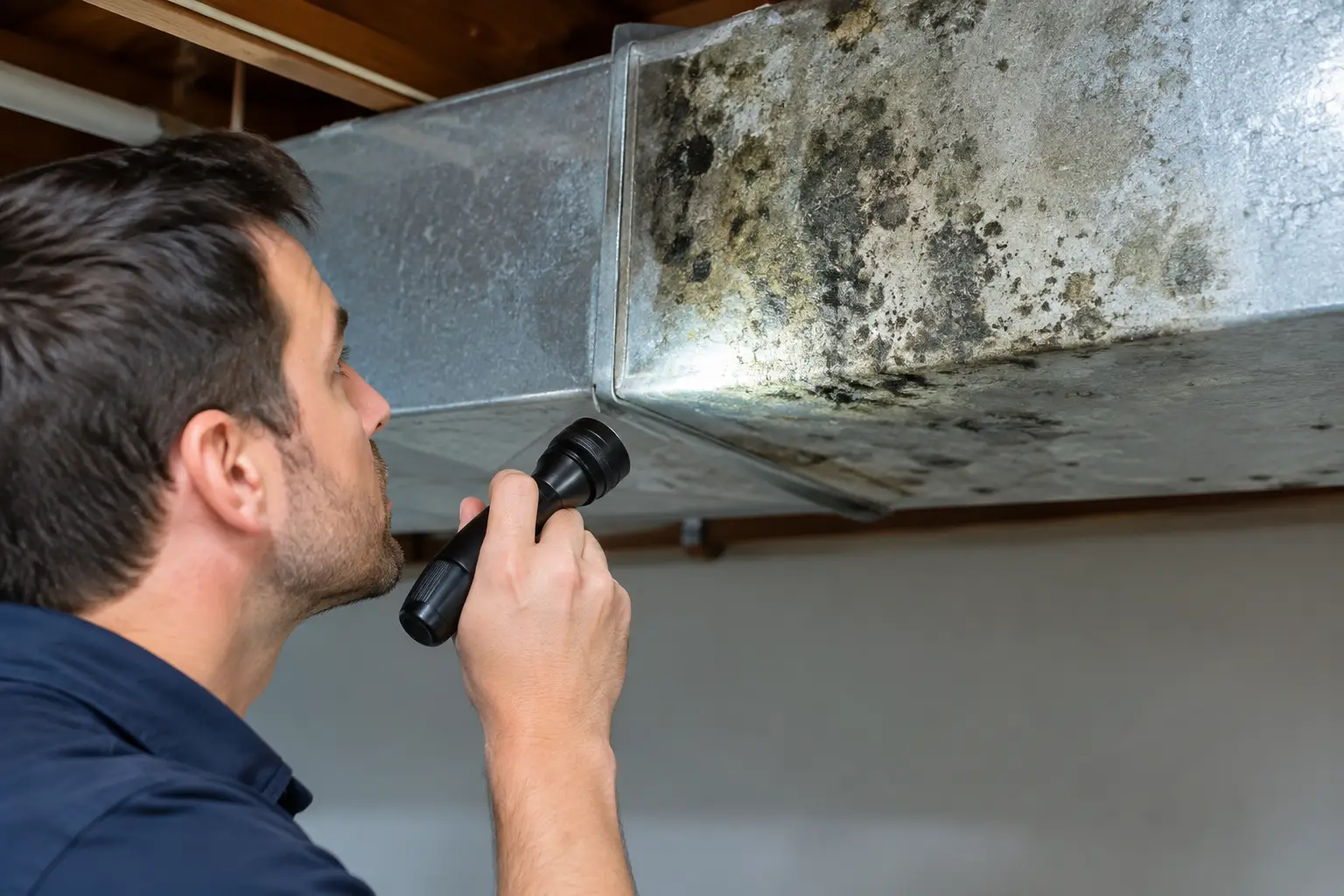
Look at the supply and return vent covers, the ceiling or wall around them, and accessible portions of the air handler. Dark, greenish, gray, or fuzzy-looking patches may be mold, but they may also be dust stuck to condensation-stained surfaces.
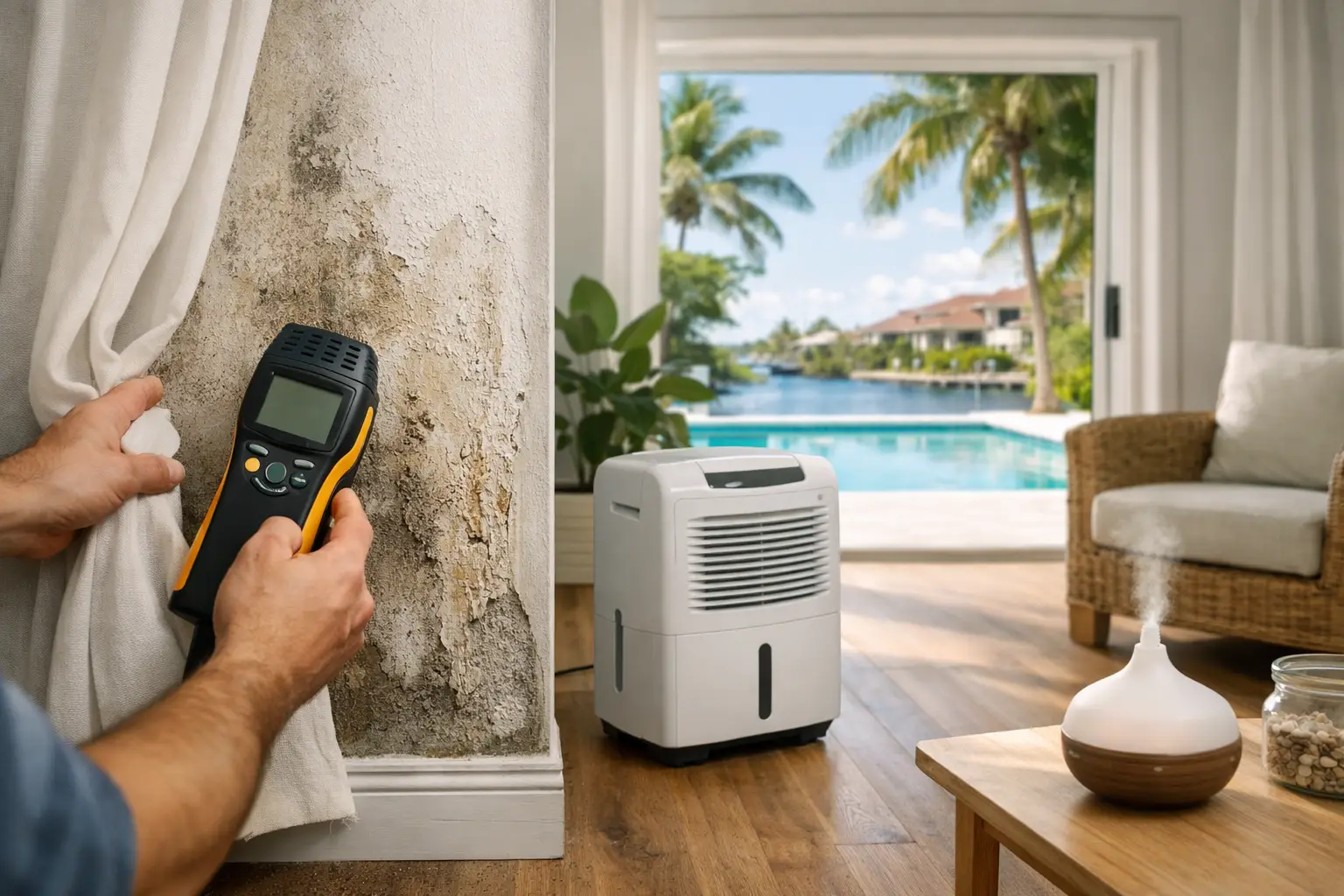
Condensation marks, peeling paint, damp drywall, or rust near a register are just as meaningful as the spots themselves. They suggest moisture is present, and moisture is the problem that needs to be solved.
Repeated dust buildup with a damp or sticky feel
Normal dust near vents is common. What raises concern is buildup that returns unusually fast, clumps together, feels damp, or appears alongside a musty odor. In a humid home, dust can hold moisture and collect around vent edges, filters, coils, and return grilles.
This is also a good time to check the filter. A clogged or poorly fitted filter can allow more debris into the system and reduce airflow, which may contribute to coil icing or condensation problems.
Comfort and allergy changes when the AC runs
Sneezing, throat irritation, coughing, watery eyes, or headaches can have many causes, including pollen, pet dander, cleaning products, and outdoor air conditions. They do not confirm mold. But if symptoms are noticeably worse in one room or when the AC begins running, an indoor air quality inspection can help identify what is happening.
Pay special attention if young children, older adults, or people with respiratory conditions are affected. The practical priority is reducing exposure to any damp, dirty, or contaminated area while the source is evaluated.
Weak airflow, excess humidity, or AC drainage issues
Mold concerns often travel with HVAC performance problems. Rooms that feel muggy, vents with weak airflow, frequent system cycling, water around the indoor unit, or a clogged condensate drain can all create conditions that encourage growth.
If your home feels humid even though the thermostat is set low, the system may not be removing moisture effectively. That can be caused by equipment sizing, maintenance needs, duct leakage, or a mechanical issue. It depends on the home and system, which is why a visual inspection alone is rarely enough.
How to check safely before calling a professional
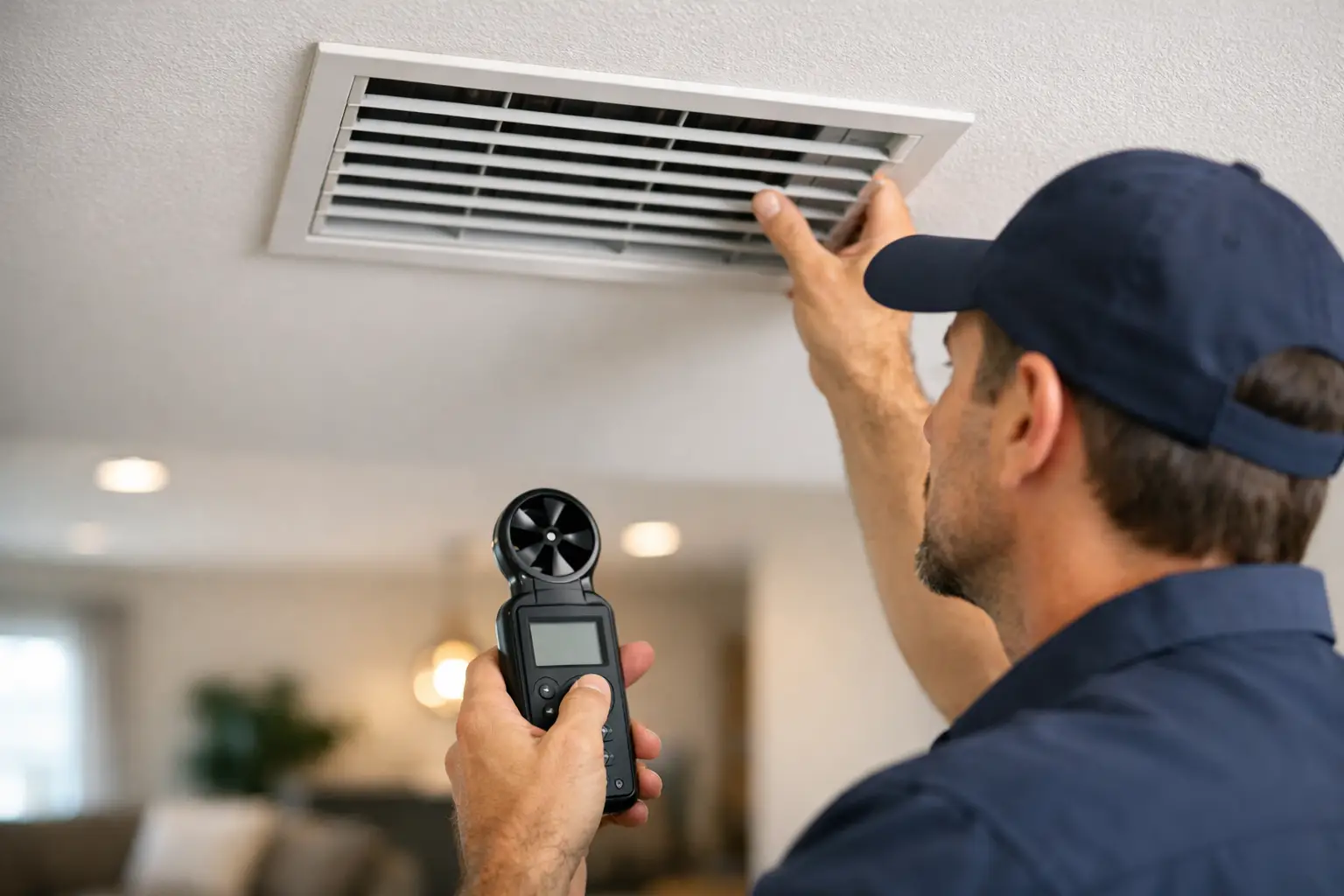
Homeowners can make a few useful observations without opening duct sections or disturbing suspected growth. Start with accessible areas: remove and inspect a vent cover if it can be done safely, look at the visible boot behind it, and check for dampness or staining around the opening.
At the air handler, look for standing water, overflow staining, a blocked-looking drain line, rust, or wet insulation. Check that the filter is clean, correctly sized, and seated properly. Take clear photos of anything that looks unusual and note when odors or symptoms occur. This documentation can help a technician trace the issue faster.
Do not reach deep into ductwork, scrape unknown material, or use household bleach inside the system. Scrubbing or blowing air into a contaminated area can spread particles, damage duct liners, and leave the underlying moisture problem untouched. Foggers and heavily scented products may mask odors for a short time, but they are not a substitute for source removal and proper cleaning.
Mold or dust? Why a professional inspection matters
Many homeowners see dark material around a vent and assume the worst. In reality, soot-like dust, construction debris, insulation particles, and mildew staining can resemble mold. Laboratory testing may be appropriate in some cases, particularly after significant water damage or when documentation is needed, but a trained HVAC inspection usually comes first.
A qualified technician should inspect the accessible ductwork, supply and return sides, air handler, evaporator coil, drain pan, condensate line, filter condition, and signs of duct leakage or insulation damage. They should explain what they find in plain language and provide photo documentation rather than asking you to take the diagnosis on faith.
The right solution depends on the condition of the system. If there is surface buildup and no active moisture issue, mechanical duct cleaning and coil cleaning may be appropriate. If growth is confirmed on porous or damaged duct insulation, replacement of affected material may be safer than attempting to clean it. If the drain system, coil, or humidity control is the source, that issue must be corrected to prevent the problem from returning.
What professional mold-related duct service should include
A credible service process is more than a quick spray through a vent. The Ductors begins by evaluating the condition of the HVAC system and identifying visible contamination, moisture indicators, and airflow concerns. From there, the work should focus on removing accumulated debris with professional equipment, cleaning the affected HVAC components, and applying sanitization only where it is appropriate for the situation.
Before-and-after photos matter because homeowners deserve to see the work performed. Post-service verification also provides a chance to confirm that accessible areas are clean, the system is operating normally, and the technician has addressed the conditions that contributed to the concern.
For extensive contamination, active leaks, or water-damaged building materials, duct cleaning may be only one part of the solution. Mold behind drywall, in ceiling cavities, or under flooring requires the right remediation approach for those materials. A trustworthy provider will tell you when the problem goes beyond the HVAC system.
Prevent moisture from returning to your ducts
The most effective long-term strategy is moisture control. Keep indoor humidity at a comfortable level, replace HVAC filters on schedule, and have the AC system maintained so coils and drains can do their jobs. Repair roof, plumbing, and duct leaks quickly, especially after Florida storms.
Avoid closing too many supply vents or blocking return grilles with furniture. Restricted airflow can affect system balance and may increase condensation risk. If certain rooms stay humid or smell musty, do not wait for the issue to spread. Early inspection is usually simpler and less disruptive than addressing prolonged moisture damage.
A clean duct system supports cleaner air, but dry, properly operating HVAC equipment is what helps keep it that way. If you notice musty odors, visible staining, or recurring humidity problems, a clear inspection and documented explanation can give you the next right step for your home.