Your AC may be running for most of the year in Tampa Bay, but it cannot cool efficiently when its coils are coated in dust, debris, or biological buildup. Learning how to maintain AC coils helps protect the comfort of your family, reduce unnecessary strain on the system, and catch moisture problems before they turn into musty odors or costly repairs.
AC coils are not a cosmetic detail. They are where your system absorbs heat from inside your home and releases it outdoors. When airflow is restricted or coil surfaces are dirty, your equipment has to work harder to deliver the same cool air. In Florida’s heat and humidity, that extra workload adds up quickly.
Know Which AC Coils Need Attention
Most central air systems have two main coils. The evaporator coil is inside the home, usually above or near the indoor air handler. It pulls heat and moisture from the air as your system cools. The condenser coil is in the outdoor unit and releases that heat outside.
The outdoor condenser coil is exposed to grass clippings, leaves, landscape mulch, pollen, dirt, and coastal moisture. The indoor evaporator coil is more protected, but it can collect fine dust that gets past the filter. Because it stays cold and damp while the system runs, it is also vulnerable to buildup associated with high indoor humidity and drainage issues.
Both coils matter, but they should not be treated exactly the same. Homeowners can safely handle basic outdoor upkeep and filter changes. The indoor coil often requires a trained inspection and careful cleaning because it is difficult to access and easy to damage.
Start With the Air Filter
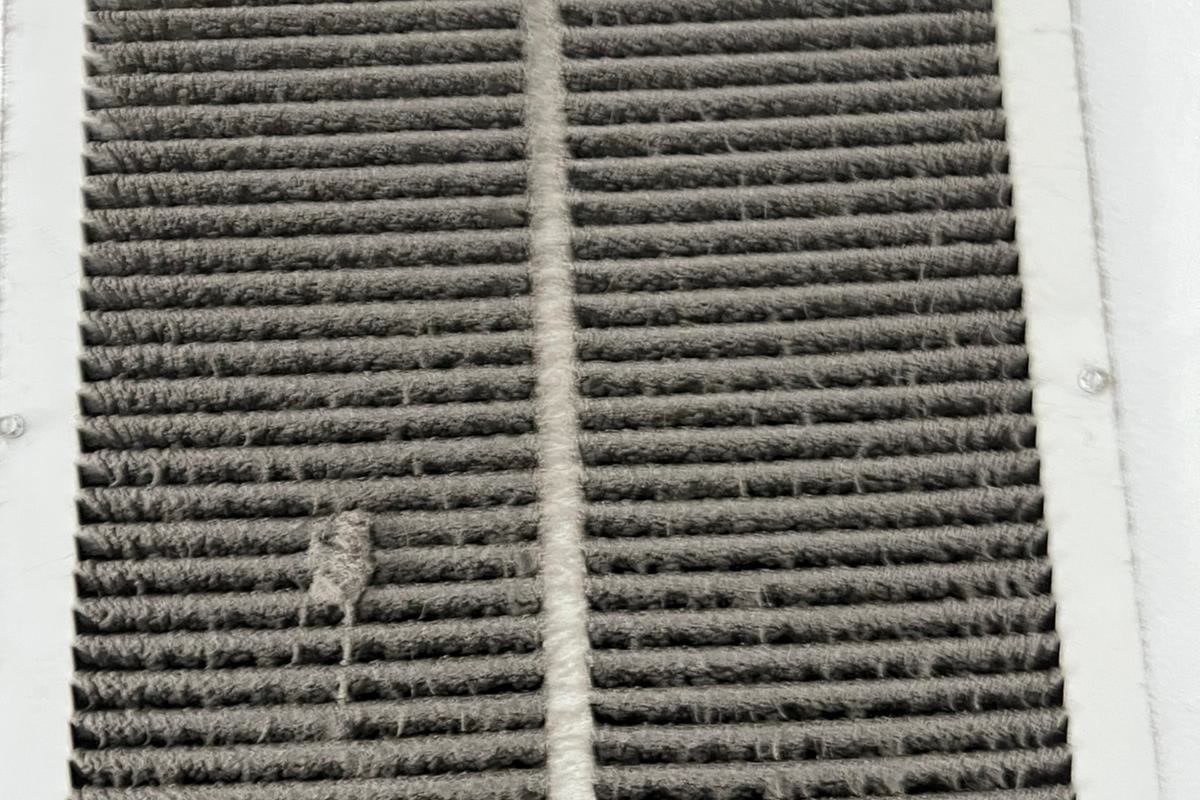
The simplest way to maintain AC coils is to keep the return-air filter clean and correctly fitted. Your filter is the first line of defense against dust reaching the evaporator coil. A neglected filter can reduce airflow, allow particles deeper into the system, and make the coil dirty faster.
Check the filter every month during heavy cooling season. Many homes need a replacement every 30 to 90 days, but the right schedule depends on the filter type, whether you have pets, how often doors and windows are opened, and how long the AC runs each day. A home with shedding pets or active allergy concerns may need more frequent changes.
Do not assume the highest-rated filter is always the best choice for your system. Very dense filters can restrict airflow if the equipment was not designed for them. Use the filter size and efficiency rating recommended by your HVAC manufacturer or technician. The goal is cleaner air without making the blower work against unnecessary resistance.
Keep the Outdoor Condenser Coil Clear
The condenser needs open space to move heat out of your home. When shrubs, vines, patio furniture, or lawn debris crowd the unit, hot air can recirculate around it. That reduces efficiency and can raise operating temperatures.
Keep at least 2 feet of open space around the outdoor unit, and avoid stacking items on top of it. Trim back landscaping regularly, especially during the fast-growing rainy season. After mowing, check for grass clippings lodged in the coil fins or around the base.
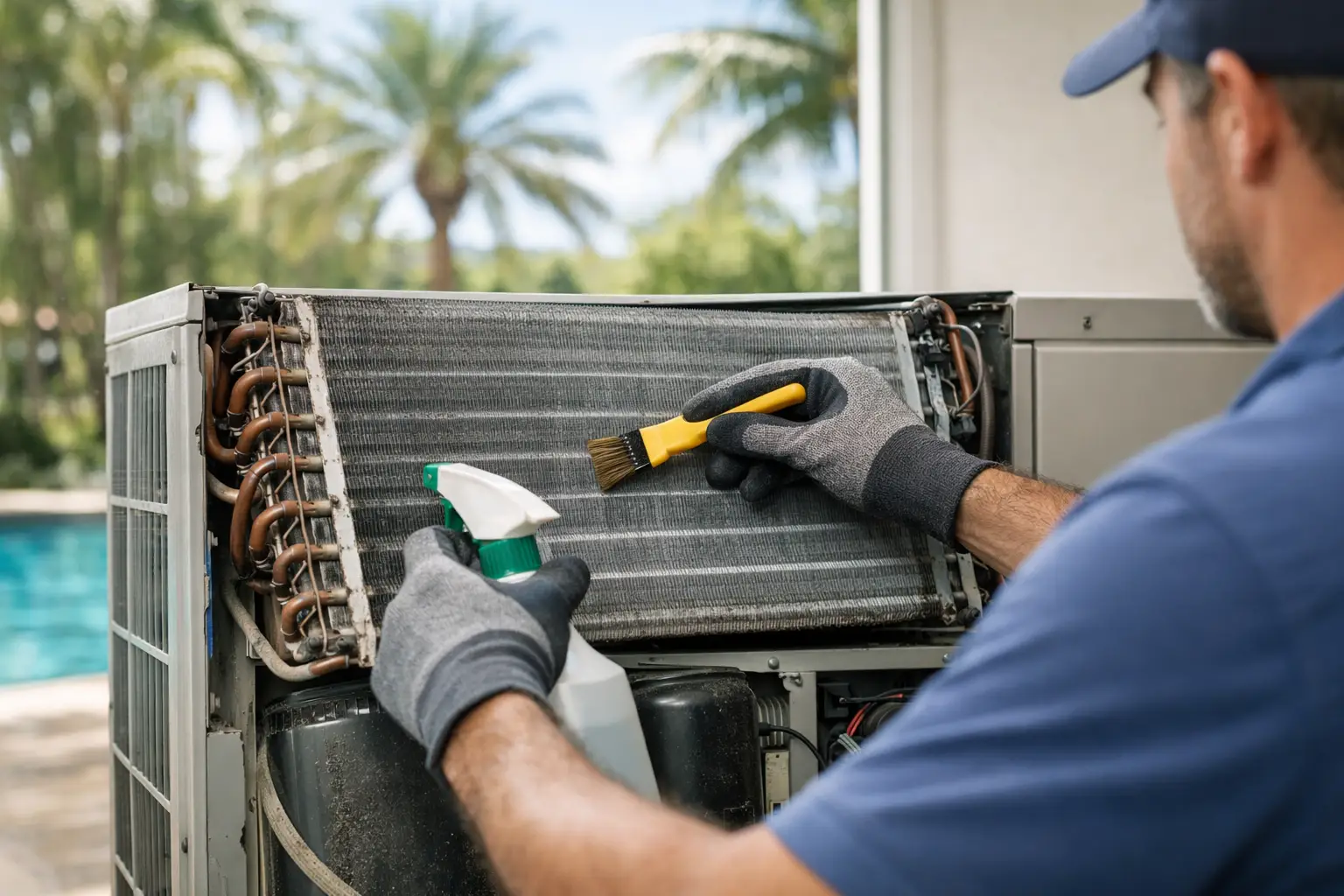
With power turned off at the outdoor disconnect, you can gently remove loose debris from the exterior using a soft brush or a low-pressure garden hose. Spray lightly and avoid forcing dirt farther into the fins. Never use a pressure washer. The thin aluminum fins bend easily, and damaged fins restrict airflow just as effectively as dirt.
If the coil looks matted with grime, if the fins are crushed, or if you see oily residue, stop there. Strong chemical cleaners and aggressive brushing can cause damage when used incorrectly. A professional coil cleaning is the safer choice.
Watch the Drain Line and Moisture Around the Indoor Coil
Your evaporator coil removes moisture from indoor air, and that water should flow through the condensate drain system. In humid Florida homes, the drain line works hard. If it clogs, water may back up into the air handler, trigger a safety switch, damage nearby materials, or contribute to persistent dampness.
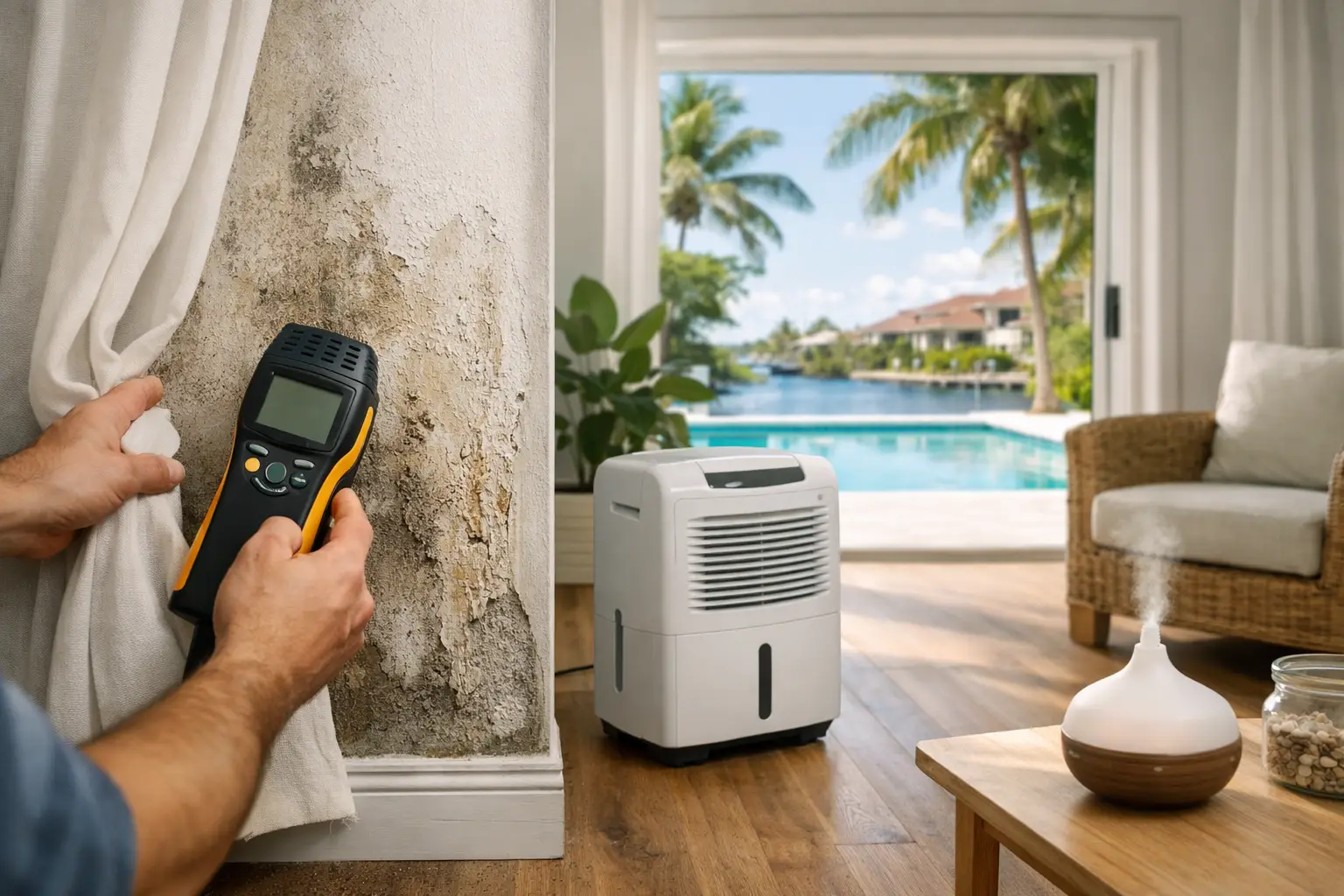
Check around the indoor unit periodically for standing water, staining, corrosion, or a musty smell. If your drain pan is accessible, look for signs of overflow. You may also notice that the system shuts off unexpectedly while the thermostat still calls for cooling.
Some homeowners use a small amount of vinegar in an accessible condensate drain line as a routine preventive measure. That can be helpful in certain setups, but it is not a fix for an active blockage, a damaged drain pan, or recurring contamination. Avoid pouring bleach into the system. It can damage components and may create fumes you do not want moving through the home.
Signs Your AC Coil May Already Be Dirty
Coils can lose efficiency gradually, so the warning signs are often easy to overlook. Pay attention when comfort changes even though the thermostat setting has not.
- Rooms feel warmer or more humid than usual, especially in the afternoon.
- Airflow from supply vents seems weak despite a clean filter.
- Your AC runs longer cycles or struggles to reach the set temperature.
- Electricity bills rise without a clear change in household usage.
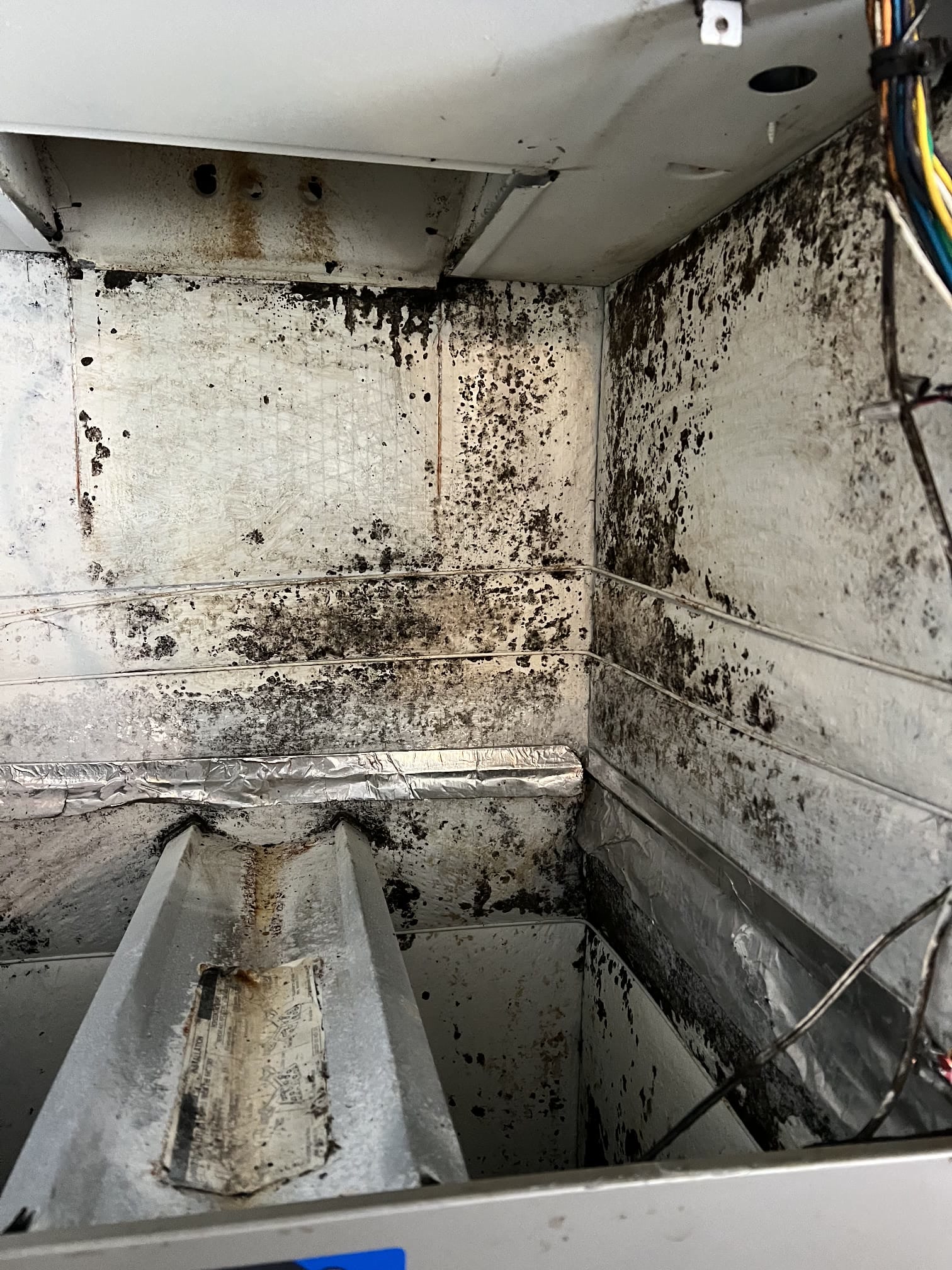
- You notice musty odors when the system starts or runs.
- Ice forms on refrigerant lines, the indoor coil area, or the outdoor unit.
A frozen coil is not a problem to ignore. It may be caused by restricted airflow, a dirty coil, a filter issue, blower trouble, or low refrigerant. Turn the cooling system off and call a qualified HVAC professional rather than continuing to run it. Running a frozen system can create larger equipment problems.
When DIY Maintenance Is Enough and When It Is Not
Basic maintenance goes a long way. Replacing filters, keeping the condenser clear, checking visible drainage, and scheduling regular HVAC service all reduce the chance of serious coil buildup. For a newer system in a clean home with strong filtration, that may be enough between professional visits.
However, indoor coil cleaning is not usually a DIY project. The coil may sit behind sealed panels, wiring, insulation, refrigerant lines, and a drain pan. Accessing it improperly can bend fins, damage insulation, create drainage problems, or expose you to sharp metal edges and electrical components. More importantly, cleaning only what you can see may leave contaminants deeper in the coil and air handler.
Professional cleaning is especially worthwhile if your home has had renovation dust, water intrusion, visible mold concerns, pets, heavy indoor dust, recurring drain clogs, or persistent odors. It also makes sense when an inspection confirms airflow restriction or buildup that basic maintenance cannot reach.
What Professional AC Coil Cleaning Should Include
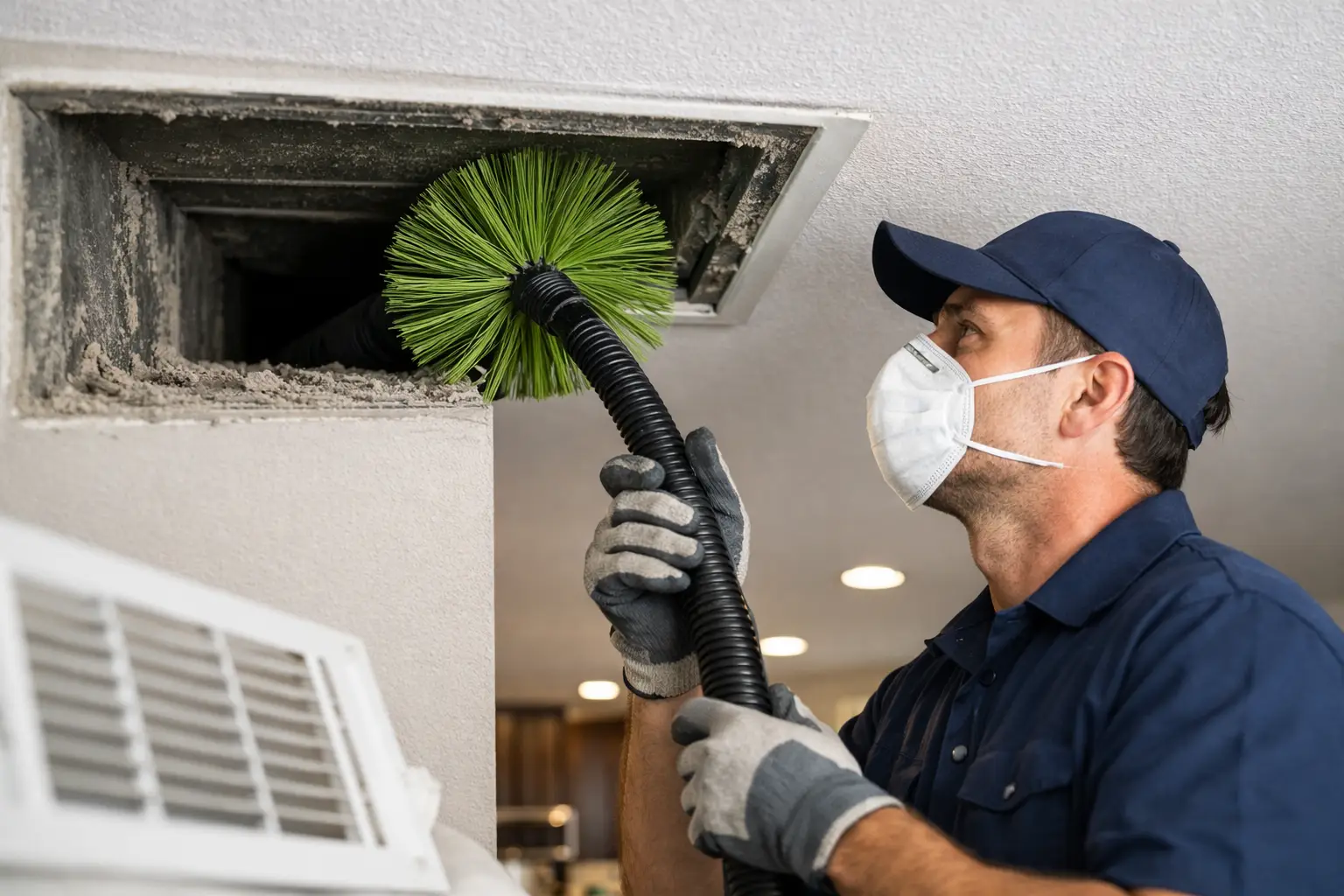
A thorough appointment should begin with an inspection, not a quick spray-and-go service. A trained technician should identify whether the issue is the evaporator coil, condenser coil, drain system, blower area, filtration, duct contamination, or a combination of concerns.
The cleaning process may include safe equipment shutdown, controlled access to the coil, mechanical removal of buildup, appropriate coil-cleaning methods, drain-pan and drain-line attention, and a check of airflow-related components. If there are signs of microbial growth or recurring moisture, the technician should explain what was found and what follow-up steps are appropriate.
Ask for clear communication and visible evidence. Before-and-after photos can help you understand the condition of the coil and verify the work completed. At The Ductors, that kind of clear, respectful explanation matters because homeowners should not have to guess what is affecting the air moving through their home.
Set a Maintenance Schedule That Fits Florida
In Central Florida, AC maintenance is not a once-a-year afterthought. Your system may run through long stretches of hot, humid weather, which means filters load up faster and drainage components see more moisture.
For most households, check filters monthly, keep the outdoor condenser clear throughout the year, and schedule professional HVAC maintenance at least annually. If your home has high humidity, pets, allergy sensitivities, frequent guests, or a system that runs nearly nonstop, an inspection every six months may be a better fit.
Commercial spaces often need a tighter schedule because of longer operating hours, larger occupant loads, and greater dust exposure. A maintenance plan should reflect how the equipment is actually used, not just the calendar.
A clean coil will not solve every cooling problem, but it gives your AC a fair chance to do its job. Keep the filter fresh, protect the outdoor unit from debris, take moisture warnings seriously, and bring in a professional when the indoor coil or drain system needs more than a surface check. Your family should feel cool, breathe cleaner air, and hear an explanation they can trust before a small maintenance issue becomes a midsummer emergency.